

Your body needs cobalamin to stay energized, think clearly, and feel your best every single day. This essential water-soluble nutrient plays a powerful role in keeping you healthy and vibrant. Many people don’t realize just how important this nutrient truly is.
Cobalamin supports red blood cell formation, helps your body create DNA, and keeps your nervous system running smoothly. Without enough of this nutrient, you might experience fatigue, mental fog, or other troubling symptoms. The good news is that understanding your needs can help you maintain optimal health.
This comprehensive guide will walk you through everything you need to know. You’ll discover how this essential nutrient benefits your body, how much you need daily, which foods provide the best sources, and how to recognize warning signs of deficiency. Whether you’re looking to boost your energy levels or simply want to make informed decisions about your daily vitamin intake, you’ll find practical answers here.
Vitamin B12 (cobalamin) is an essential water-soluble vitamin your body cannot produce on its own. It is critical for red blood cell formation, DNA synthesis, and nervous system health. Adults need 2.4 mcg daily, primarily from animal foods — meat, fish, dairy, and eggs. Vegetarians, vegans, adults over 50, and people taking metformin or acid-reducing medications face the highest deficiency risk. Early warning signs include fatigue, tingling hands or feet, pale skin, and brain fog.
Key Takeaways
- Cobalamin is a water-soluble essential nutrient critical for energy production, brain function, and red blood cell formation
- Understanding vitamin B12 benefits helps you maintain mental clarity, neurological health, and overall wellness
- This nutrient primarily comes from animal-based food sources like meat, fish, dairy, and eggs
- Recognizing B12 deficiency symptoms early can prevent serious health complications and fatigue
- Proper dosage varies by age, dietary choices, and individual health needs
- Certain groups including vegetarians, vegans, and older adults face higher deficiency risks
1. What Is Vitamin B12 and Why Does It Matter?
Your body needs vitamin B12 for many important tasks. Without enough, your body can’t do its job well. Vitamin B12 helps make healthy blood cells and keeps your brain sharp.
This vitamin, also known as cobalamin, affects almost every part of your body. Knowing how it works can help you make better food choices and stay healthy.
The Essential Role of Vitamin B12 in Your Body
Vitamin B12 is key for your health in many ways. It helps make red blood cells that carry oxygen. Without enough, your red blood cells can’t carry oxygen well.
Vitamin B12 is also needed for DNA synthesis. Your cells divide and grow every day, needing B12 to copy genetic material. This is why B12 is essential for cell division.
Your nervous system relies on vitamin B12 to keep nerve fibers insulated. Without it, nerve signals can’t travel well, causing numbness or serious problems.[1]
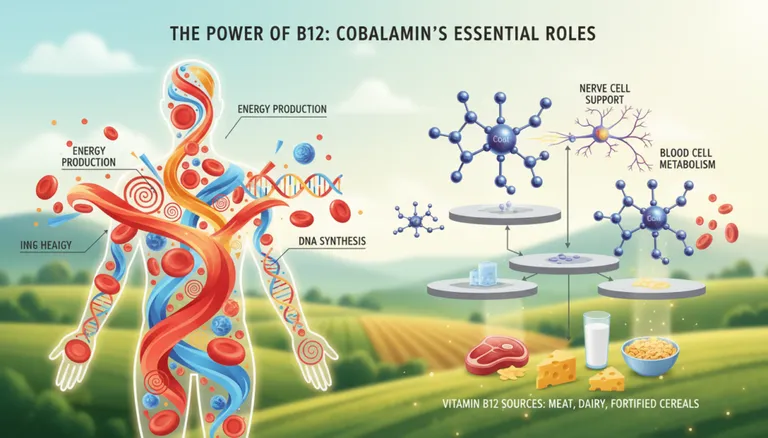
Cobalamin boosts energy metabolism. It helps turn food into energy through complex reactions. This is why B12 deficiency can make you feel tired or weak.
Your immune system also needs B12. It helps make white blood cells to fight infections. Plus, vitamin B12 is important for brain function, supporting memory and concentration.
Different Forms of Vitamin B12 Explained
When looking at supplements or food labels, you’ll see different vitamin B12 forms. The two main types are cyanocobalamin and methylcobalamin. Knowing the difference can help you pick the right one for you.
Cyanocobalamin is the synthetic form in supplements and fortified foods. It’s stable and lasts long, making it a good choice. Your body can easily convert it into the active forms it needs.
This form is reliable and has been used in supplements for years. Its stability ensures you get the full amount listed on the label.
Methylcobalamin is the natural form in foods like meat, fish, and dairy. Some supplements use this form because it’s active right away. Studies show methylcobalamin is more easily absorbed by your body.[2]
This natural form stays in your body longer than cyanocobalamin. It may offer longer-lasting benefits. Smokers might find methylcobalamin more beneficial, as it’s excreted less quickly than cyanocobalamin.
Both vitamin B12 forms can address deficiency and support health. Your choice might depend on your diet, budget, or health needs. Many doctors recommend either form, knowing both can help maintain healthy B12 levels.
The most important thing is to get enough vitamin B12. Whether from food or supplements, it’s crucial for your health in many ways.
2. Science-Backed Health Benefits of Vitamin B12
Your body needs vitamin B12 for many important tasks. It helps make blood cells, supports your brain, and keeps your heart healthy. Research shows how crucial this nutrient is for your overall health.
Let’s look at how B12 helps you feel and function better every day. These benefits highlight why getting enough B12 is important for everyone.

Supports Red Blood Cell Formation and Prevents Anemia
Vitamin B12 is essential for making healthy red blood cells. These cells carry oxygen to all parts of your body. With enough B12, your red blood cells work well.
But, without enough B12, you can get anemia. This is when your body makes big, irregular red blood cells. These cells can’t carry oxygen well, leading to anemia.
The symptoms of vitamin B12 anemia include:
- Persistent fatigue and weakness
- Pale or yellowish skin
- Shortness of breath during normal activities
- Dizziness or lightheadedness
- Irregular heartbeat
Doctors often treat anemia with B12 supplements or injections. Once B12 levels are right, your body makes healthy red blood cells again. Symptoms usually get better in weeks.[3]
Enhances Brain Function and Mental Clarity
Vitamin B12 is key for brain health and thinking clearly. It supports your brain and nervous system all your life. Your brain needs B12 to work well as you age.
B12 helps make neurotransmitters, which let brain cells talk to each other. It also keeps nerve cells covered with a protective layer. Without enough B12, these functions can suffer.
Research shows that keeping B12 levels up may prevent cognitive decline and dementia. This is especially important as we get older. Low B12 levels can cause confusion and memory problems that get better with supplements.[4]
The brain benefits of B12 include:
- Improved memory retention and recall
- Better focus and concentration
- Enhanced mood regulation
- Reduced risk of cognitive impairment
- Protection against brain atrophy
Boosts Energy Levels and Reduces Fatigue
Vitamin B12 is known for boosting energy. It’s linked to feeling full of life and stamina. Your body uses B12 to turn food into energy at the cellular level.
B12 helps turn carbs into glucose, your main energy source. It also helps turn fatty acids into energy your cells can use. Without enough B12, your body can’t make energy well.
This is why fatigue is a common sign of B12 deficiency. Without enough energy, you feel tired even after resting. Starting supplements can make you feel more energetic in days or weeks.
It’s important to note that B12 supplements only help if you’re deficient. Taking extra B12 won’t boost energy if you already have enough. The benefit is in correcting a deficiency and letting your body make energy normally.
Promotes Cardiovascular Health
Your heart and blood vessels also benefit from enough B12. It helps keep homocysteine levels in check. High homocysteine levels are linked to heart disease and strokes.
B12 breaks down homocysteine, keeping levels healthy. The heart benefits even more when B12 is with other B vitamins, like folic acid and vitamin B6. Together, they manage homocysteine better than any single vitamin.
Studies suggest that maintaining optimal B12 levels may contribute to:
- Lower homocysteine concentrations
- Reduced inflammation in blood vessels
- Better overall cardiovascular function
- Decreased risk of heart-related complications
While B12 alone isn’t enough for heart health, it’s a key part of it. With a healthy diet, exercise, and lifestyle, B12 supports your heart’s health for years.[5]
3. Vitamin B12 and Nervous System Health
Your body’s command center, the nervous system, sends billions of signals every second. Vitamin B12 is crucial for these signals to flow smoothly. Without enough B12, your body’s communication network can break down, leading to serious health issues.
Vitamin B12’s impact on your nervous system is significant. Deficiency symptoms often show up in the nerves first. Knowing how B12 protects your nerves can help you catch problems early.
Protection of the Myelin Sheath
Imagine your nerves as electrical wires. They need insulation, just like wires, to work well. The myelin sheath acts as this insulation, helping signals travel fast and clear.
Vitamin B12 is key to keeping the myelin sheath healthy. Without enough B12, your body can’t make the compounds needed for myelin. This leads to the sheath breaking down, leaving nerves exposed.[6]

When the myelin sheath fails, nerve signals slow down or get mixed up. This is called demyelination. It can cause permanent damage if not treated. But, catching B12 deficiency early can help repair the sheath once B12 levels are back up.
People with conditions like multiple sclerosis know how nerve damage can hurt. Keeping vitamin B12 levels up helps protect against this damage in healthy people too.
Supporting Healthy Nerve Signal Transmission
Vitamin B12 also helps nerve signals send messages from your brain to your body. These signals control everything from walking to your heartbeat. When B12 levels drop, these signals get mixed up.
The first signs of nerve problems often show up in your hands and feet. You might feel tingling or numbness, like a “pins and needles” feeling. This happens because the longest nerves are affected first.
Balance issues and coordination problems also warn of nerve health issues. Your brain needs feedback from nerves to stay balanced. Without enough B12, these signals can weaken, making you feel off-balance or unsteady.
Muscle weakness is another sign of nerve problems. Your muscles need clear instructions from your nervous system to work right. Without enough B12, these instructions don’t get through, leading to weakness.
| Neurological Symptom | How It Manifests | Affected Body Areas | Severity Level |
|---|---|---|---|
| Tingling and Numbness | Pins and needles sensation, reduced touch sensitivity | Hands, feet, legs, arms | Mild to Moderate |
| Balance Difficulties | Unsteadiness, trouble walking, increased fall risk | Lower body, coordination centers | Moderate to Severe |
| Muscle Weakness | Reduced strength, difficulty lifting objects, fatigue | All major muscle groups | Moderate |
| Vision Changes | Blurred vision, optic nerve damage | Eyes, optic nerves | Severe |
Don’t ignore symptoms like tingling, balance issues, or muscle weakness. If you’re experiencing these, talk to your doctor about your vitamin B12 levels. Early action can prevent permanent damage and restore your nerve function.
Vitamin B12 is vital for nerve health. It keeps your nervous system working right, enabling you to interact with the world. Your nervous system is what makes your daily activities possible.
4. How Much Vitamin B12 Do You Really Need?
Getting the right amount of vitamin B12 is simple once you know the basics. Your body needs different amounts based on your age and life stage. The good news is that these amounts are measured in micrograms (mcg or μg), which are tiny and easy to get from food or supplements.
Knowing the right B12 dosage for you is key to staying healthy. Whether you’re a parent or an older adult, knowing these guidelines helps you make informed choices about your health.
Daily Requirements Across All Life Stages
Your vitamin B12 needs change as you grow. From infancy to senior years, each stage needs specific amounts for growth, energy, and cell health.
Health organizations give guidelines for B12 intake. The National Institutes of Health (NIH) and the National Health Service (NHS) both stress the importance of regular intake.[7]
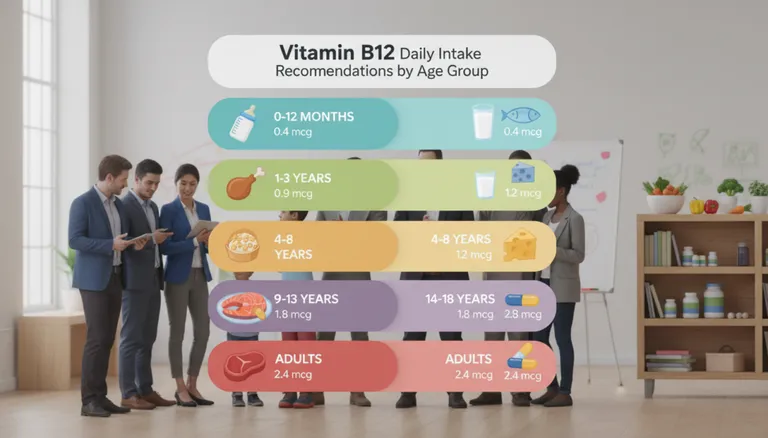
Here’s a detailed look at B12 dosage needs for every age group:
| Age Group | Daily B12 Requirement | Key Benefits |
|---|---|---|
| Birth to 6 months | 0.4 mcg | Brain development and growth |
| 7-12 months | 0.5 mcg | Nervous system formation |
| 1-3 years | 0.9 mcg | Energy and cognitive development |
| 4-8 years | 1.2 mcg | Physical growth and learning |
| 9-13 years | 1.8 mcg | Puberty support and cell production |
What Growing Children Need
Children need specific amounts of vitamin B12 for their growth. Enough B12 is crucial for brain function, energy, and blood cell health.
Infants get B12 from breast milk or formula. Newborns need 0.4 mcg daily, and babies seven to twelve months need 0.5 mcg.
As children grow, their B12 needs increase. Toddlers need 0.9 mcg daily for their learning and play. Children aged four to eight need 1.2 mcg for school and growth.
Pre-teens need 1.8 mcg daily as they prepare for adolescence. Teenagers need 2.4 mcg to support the changes of puberty.
Parents should make sure children get enough B12 through a balanced diet. Most kids eating animal products meet their needs easily. But kids on plant-based diets may need fortified foods or supplements.
Adult and Older Adult Requirements
Adults need about 2.4 mcg of B12 daily, according to the NIH. The NHS suggests 1.5 mcg may be enough. This amount helps with nerve function, red blood cell production, and energy.[8]
Most adults can easily meet this B12 intake with a varied diet — for a full breakdown of what vitamins to take daily for balanced nutrition, see our science-backed guide. Many B12-rich foods provide more than the daily amount.
However, older adults face unique challenges that need special attention. After fifty, many people have less stomach acid, making it harder to absorb B12 from food.
Seniors with low B12 levels should take 500 mcg of crystalline B12 daily. This higher dose helps compensate for poor absorption and prevents deficiency problems.
Pregnant women need 2.6 mcg daily to support fetal brain development and prevent birth defects. Breastfeeding mothers need 2.8 mcg daily to ensure B12 is passed to their babies.
These increased needs during pregnancy and lactation highlight the importance of monitoring B12 levels. Many prenatal vitamins include the right amount to meet these needs.
Talking to your healthcare provider about your B12 dosage is important. They can give you personalized advice based on your age, diet, health, and medications. Blood tests can check if your intake is right or if you need to adjust.
5. Best Food Sources of Vitamin B12
Many foods naturally have lots of vitamin B12. This is good news for everyone, whether you like meat, seafood, dairy, or plant-based foods. Knowing which foods have the most B12 helps you get enough every day.
Vitamin B12 is mostly found in animal products. This makes it easier for people who eat meat and fish to get enough. But, there are also fortified foods for those who don’t eat animal products.
Top Animal-Based Sources
Animal products are the best sources of B12. They have been giving humans B12 for a long time. Different animal foods have different amounts of B12.

Beef liver is the top source of B12, with about 100 mcg per 100 grams. That’s over 4,000% of what you need in one serving. Even a small portion of liver gives you enough B12 for a week.[9]
Other organ meats like kidney and heart also have a lot of B12. They have less than liver but still offer a lot. Regular beef has about 5.9 mcg per 100 grams, which is more than enough for a day.
Ground beef, steaks, and roasts are also good sources of B12. Even though organ meats might not be your favorite, eating them sometimes can really help your B12 levels.
Poultry Options
Chicken liver is another great source of B12, with 56 mcg per 100 grams. It’s often easier to eat than beef liver. Turkey and chicken breast have less B12, but eating them regularly can still help you meet your needs.
Poultry is easy to add to many meals. Try grilled chicken, roasted turkey, or liver pâté to get more B12.
Fish and Seafood Varieties
Seafood lovers have access to some of the best B12 sources. You can choose different types to keep your B12 levels up. Fish and shellfish also have omega-3 fatty acids and other nutrients.
Sardines have 28 mcg of B12 per 100 grams. Mussels have 22.1 mcg, and oysters have 18 mcg. Mackerel has 10 mcg, and tuna has 4.3 mcg. Eating fish two or three times a week can really boost your B12.
“The ocean provides some of nature’s most concentrated sources of vitamin B12, with shellfish and oily fish leading the way in both quantity and quality.”
Dairy Products and Eggs
Dairy and eggs are great for getting B12. They’re easy to find in many foods. Swiss cheese has about 3.3 mcg of B12 per 100 grams, and milk has about 0.5 mcg per cup.
Eggs have about 1.1 mcg of B12 per 100 grams. Most of it is in the yolk. Two large eggs give you about 60% of what you need for a day.
| Food Source | B12 Content (mcg per 100g) | Serving Size | % of Daily Value |
|---|---|---|---|
| Beef Liver | 100 | 3 oz (85g) | 3,540% |
| Chicken Liver | 56 | 3 oz (85g) | 1,980% |
| Sardines | 28 | 3 oz (85g) | 990% |
| Mussels | 22.1 | 3 oz (85g) | 780% |
| Mackerel | 10 | 3 oz (85g) | 354% |
Fortified Foods for Plant-Based Diets
For vegetarians and vegans, B12 fortified foods and supplements are key. Some plant foods have B12-like compounds, but they’re not always good enough. Knowing about B12 for vegans is important.
Some plants like chlorella, spirulina, shiitake mushrooms, and fermented foods have B12. But, it’s not clear if they work well for humans. Some might even have B12-like substances that can block true B12 absorption.
Nutritional yeast fortified with B12 is a good choice for vegans. It tastes cheesy and has 5-100 mcg per serving. Fortified cereals have 1.5-6 mcg per serving, making them a great breakfast option. Plant-based milks fortified with B12 have 0.5-1.2 mcg per cup.
Meat alternatives and plant-based burgers are also fortified with B12. They have 1-3 mcg per serving. These foods help vegans get enough B12. The Vegan Society suggests eating at least 10 mcg daily from fortified foods or taking a B12 supplement.
When you rely on fortified foods, reading labels is important. Not all plant-based products have B12. Many vegans take a B12 supplement to make sure they get enough.[10]
6. Recognizing Vitamin B12 Deficiency Signs
Knowing the signs of vitamin B12 deficiency helps you act fast. Your body gives clues when B12 levels drop. Catching these signs early is key to staying healthy.
Spotting vitamin B12 deficiency can be tricky. Symptoms often start small and can be mistaken for other issues. Knowing the signs of low B12 is crucial for your health.
Early Warning Signs You Shouldn’t Ignore
The first B12 deficiency symptoms are often subtle. You might feel tired all the time, even after sleeping well. This tiredness is different and affects your daily life.
Changes in skin color can also signal a problem. Some people get paler, while others notice a yellowish tint. These changes happen because B12 affects red blood cells.
Frequent headaches and mood swings are early signs. Feeling irritable, sad, or anxious without reason is a warning. While these symptoms can have many causes, seeing several together is a red flag.[13]
Physical Symptoms of Deficiency
As vitamin B12 deficiency gets worse, symptoms become more obvious. You’ll feel extremely tired and weak, even for simple tasks. This is because your body can’t make enough healthy red blood cells.
Your tongue can show signs of B12 issues. Glossitis makes your tongue sore, swollen, and red. Some people also get painful mouth ulcers or sores.
Other signs include:
- Muscle weakness that makes climbing stairs or carrying groceries difficult
- Problems with coordination or an unsteady gait when walking
- Shortness of breath during normal activities
- Heart palpitations or rapid heartbeat
- Skin issues like acne, unusual pigmentation changes, or patches of discoloration
These symptoms happen because your cells aren’t getting enough oxygen and nutrients. But, treating the deficiency usually fixes these problems.
Neurological and Cognitive Symptoms
Some B12 deficiency symptoms affect your nervous system and brain. You might feel tingling or numbness in your hands and feet. This is a sign of nerve damage.
Cognitive symptoms are also concerning. You might feel “brain fog” or have trouble remembering things. Difficulty focusing on tasks is another warning sign.
Vision problems can occur due to optic nerve damage. You might see things blurry or differently. Balance issues and dizziness are also signs of nerve problems without enough B12.
Mental health can also be affected. Depression and anxiety can worsen with deficiency. B12 helps make neurotransmitters that control mood. These symptoms happen because B12 is key for nerve health.[12]
Long-Term Effects of Untreated Deficiency
Ignoring vitamin B12 deficiency can lead to serious problems. Nerve damage can become permanent if not treated. That’s why spotting signs of low B12 early is so important.
Untreated deficiency can cause severe anemia. This makes your heart work harder, increasing heart strain. Elevated homocysteine levels raise your risk of heart disease and stroke.
Bone health is also at risk. People with chronic deficiency are more likely to get osteoporosis and fractures. B12 is important for bone density and skeletal strength, helping protect your bones as you age.
Perhaps the most worrying is the risk of cognitive decline. Long-term deficiency can lead to memory loss and dementia in older adults. Severe, prolonged deficiency can cause irreversible nerve damage.[11]
If you’re experiencing any of these symptoms, please consult your healthcare provider. A simple blood test can check your B12 levels. Early detection and treatment can prevent serious problems and help you feel better. Your symptoms are important, and addressing them quickly protects your health now and in the future.
7. Who Is at Risk for Vitamin B12 Deficiency?
Anyone can get a vitamin B12 deficiency, but some groups face bigger challenges. Knowing the B12 deficiency risk factors helps you see if you need more B12. This knowledge lets you act early to avoid deficiency symptoms.
Many things can make it hard for your body to use B12 well. These include getting older, what you eat and the nutritional gaps in your diet, and underlying health conditions. Each group faces different challenges.
Older Adults and Age-Related Absorption Issues
As we age, our bodies process B12 differently. About 1 in 20 people aged 65-74 and 1 in 10 people aged 75 and older have a B12 deficiency. This shows how common it is with age.
The main reason for B12 absorption problems with age is less stomach acid. Your stomach needs acid to break down food and release B12. Older people have less acid, making this harder.
Another issue is intrinsic factor, a protein your stomach makes. It helps your body absorb B12. As you age, making this protein decreases, making it harder to absorb B12.
Older adults might also have dental problems or eat less. These issues make it tough to get enough B12. That’s why many doctors suggest B12 supplements for seniors.[15]
Vegetarians and Vegans
Plant-based diets are healthy but need careful planning for vitamin B12 for vegans and vegetarians. Since B12 is mostly in animal products, vegans and vegetarians need supplements.
This doesn’t mean plant-based diets are bad. It just means B12 supplements are key for health. Many people on plant-based diets do well with fortified foods or supplements.
Fortified foods can help. Options include:
- Fortified plant-based milk alternatives (soy, almond, oat)
- Fortified breakfast cereals
- Nutritional yeast with added B12
- Fortified meat alternatives and protein products
Vegetarians and vegans should check their B12 levels often. Most doctors recommend daily supplements or fortified foods for strict plant-based diets.[14]
People with Digestive Disorders and Gut Issues
Many gut problems make it hard to absorb B12. Pernicious anemia attacks the stomach, making it hard to absorb B12. Without intrinsic factor, your body can’t use B12 from food.
Other digestive issues that affect B12 absorption include:
- Celiac disease – damages the small intestine where B12 absorption occurs
- Crohn’s disease – inflammation can affect the ileum, the primary B12 absorption site
- Atrophic gastritis – chronic stomach inflammation reduces acid and intrinsic factor production
- Parasitic infections that compete for available B12
People who have had stomach surgery also have trouble absorbing B12. Surgery can reduce stomach acid or bypass areas where B12 is absorbed.
If you have these conditions, it’s important to work with your doctor to check your B12 levels. Many people with absorption issues need B12 injections to stay healthy.
Individuals Taking Certain Medications
Some medicines can make it hard for your body to absorb B12 or increase your need for it. Taking these medicines for a long time can raise your risk of deficiency.
Metformin, a common diabetes drug, is a big risk factor. Long-term use can lower B12 absorption by affecting calcium metabolism.
Medicines for heartburn and acid reflux also pose challenges. Proton pump inhibitors (PPIs) and H2 blockers reduce stomach acid. This makes it harder for your body to release B12 from food.
Regular B12 monitoring is important for anyone on these medicines, especially for a long time.
Other medicines, like some antibiotics, can also affect B12 levels. If you’re on these medicines for a long time, talk to your doctor about checking your B12 levels.
Being in a high-risk group doesn’t mean you’ll definitely get a deficiency. Knowing your risk helps you take steps to prevent it. Regular checks and talking to your doctor can help keep your B12 levels healthy, no matter your risk.
8. Testing for Vitamin B12 Levels
Testing your vitamin B12 levels is easy and straightforward. A simple blood draw can tell you a lot about your health. It helps find any B12 deficiencies early, before they cause big problems.
Whether you’re feeling symptoms or just want to stay healthy, knowing about B12 tests is key. We’ll explain how testing works and when you should get your levels checked.
What Happens During Blood Tests
A B12 blood test is like any other lab work. A small blood sample is taken from your arm. The lab checks the vitamin B12 in your blood, reporting it in picograms per milliliter (pg/mL). This lets doctors see if you have enough B12.
It’s important to understand your B12 levels. Doctors use these levels to decide if you need treatment:
- Deficient: Less than 180 pg/mL means you definitely need more B12
- Potentially Insufficient: 180-250 pg/mL means you might need more B12, but it’s not clear
- Sufficient: More than 250 pg/mL is usually enough for most adults
- Optimal for Seniors: Over 60, aim for 200-900 pg/mL, especially 300-350 pg/mL to prevent memory and homocysteine issues
- Children’s Range: Kids usually have 160-950 pg/mL, but this can vary
In some places, like Japan, they set the safe limit at 500 pg/mL. This is to avoid problems like memory loss and metabolic disorders. It shows the importance of keeping B12 levels high, not just avoiding deficiency.[16]
If your B12 test shows low levels, your doctor might do more tests. They’ll check methylmalonic acid (MMA) and homocysteine levels. These tests help confirm if you really have a B12 deficiency.
For those who prefer not to go to the clinic, at-home B12 test kits are available. They let you test your B12 levels with a finger prick. But, it’s still best to talk to a doctor to understand your results and what to do next.
The Right Time to Check Your Levels
Knowing when to test your B12 levels is important. You should get tested if you’re experiencing symptoms or if you’re in a high-risk group. Here are some examples:
- Experiencing deficiency symptoms: Feeling tired, numbness, trouble concentrating, memory issues, or balance problems
- High-risk groups: Adults over 50, vegetarians or vegans, people with digestive disorders like Crohn’s disease or celiac disease
- Taking interfering medications: Long-term use of metformin, proton pump inhibitors, or antacids that reduce B12 absorption
- Planning or experiencing pregnancy: Ensuring adequate B12 levels before and during pregnancy protects fetal brain development
- Unexplained anemia: If you’ve been diagnosed with anemia without a clear cause
- Routine monitoring: Annual testing after age 50 or if you’ve been previously diagnosed with deficiency
Don’t wait until symptoms get worse to get tested. Early detection makes treatment more effective and can prevent serious damage. Talk to your healthcare provider about testing your B12 levels at your next appointment.
Many people find out they have a deficiency during routine blood work before they even notice symptoms. This proactive approach can help you make simple changes to your diet or take supplements before health problems start. Remember, asking for the right tests is your right as a patient.
9. Treating Vitamin B12 Deficiency
If tests show you have low B12 levels, don’t worry. There are effective treatments to fix this and prevent future problems. Your doctor will choose the best treatment based on how bad your deficiency is, what’s causing it, and your health. Most people see improvements in a few months, but some might need ongoing treatment.
Treatment usually lasts a few months to a year. You’ll have follow-up tests after three months to check your progress. If your diet or body can’t absorb enough B12, you might need supplements for a long time. Luckily, there are many modern ways to manage B12 deficiency.
Oral Supplements and Daily Tablets
For mild to moderate deficiency, B12 supplements are usually a good choice. These tablets are easy to take daily and work well. You can find them in pharmacies, health stores, and online without a prescription.
The two main types are cyanocobalamin and methylcobalamin. Cyanocobalamin is the synthetic form that’s stable and well-studied. It’s also affordable. It gets converted to active B12 in your body and is safe.
Methylcobalamin is the natural, bioactive form that your body can use right away. It’s more easily absorbed and stays in your system longer. People who smoke or have certain genetic issues might do better with methylcobalamin.
Supplement doses range from 500 to 2,000 mcg daily for treating deficiency. This is much more than the daily recommended amount because your body only absorbs a small part of what you swallow. Don’t worry about these high doses; B12 is water-soluble, so any extra is just excreted in your urine.[17]
Many supplements combine B12 with folic acid and other B vitamins. These combos help with energy and nervous system health. Some people notice better energy and mental clarity within weeks of starting B12 supplements.
Vitamin B12 Injections and Their Effectiveness
Healthcare providers usually use B12 injections for severe cases or when the digestive system can’t absorb B12 well. This includes pernicious anemia, inflammatory bowel disease, or after gastric surgery. Injections put B12 directly into your bloodstream for 100% absorption.
Injections are the most effective for serious absorption problems. The forms used are hydroxocobalamin or cyanocobalamin, both proven to raise blood levels quickly and reliably. You’ll get these shots from a healthcare professional at a clinic or doctor’s office.
Initial treatment often involves weekly injections to quickly build up depleted stores. Once levels stabilize, most people switch to monthly maintenance injections. While highly effective, injections require regular healthcare visits, and some find them inconvenient or uncomfortable compared to taking pills at home.
Many patients report significant improvements after just a few injection sessions. Energy returns, brain fog lifts, and physical symptoms fade. For those who can’t absorb B12 through their gut, injections can be life-changing.
Sublingual Tablets and Nasal Spray Alternatives
New delivery methods offer options between pills and injections. Sublingual B12 tablets dissolve under your tongue and absorb directly into your bloodstream. This method bypasses the digestive system, where absorption problems often occur.
Nasal sprays and oral sprays work similarly, delivering B12 through the nasal passages or mouth tissues. These are great for people with mild to moderate absorption issues who want something more effective than regular tablets but less invasive than injections. They offer convenience without needles or doctor visits.
Oral spray supplements, like those providing 1,200 mcg per dose, are popular for their ease of use and effectiveness. Simply spray the liquid into your mouth, hold it briefly, then swallow. Many users find this method more pleasant than swallowing large tablets and appreciate knowing the B12 enters their system directly.
These alternative delivery systems work well for maintenance after initial deficiency correction or for those who prefer avoiding pills or injections. They’re also convenient for travel and busy lifestyles. Absorption rates are usually between standard oral supplements and injections.
| Treatment Method | Best For | Absorption Rate | Convenience Level | Typical Dosing |
|---|---|---|---|---|
| Oral Tablets | Mild to moderate deficiency, good digestive function | Low to moderate (1-2%) | Very high – daily at home | 500-2,000 mcg daily |
| B12 Injections | Severe deficiency, absorption disorders | Very high (100%) | Lower – requires clinic visits | Weekly then monthly |
| Sublingual/Sprays | Moderate deficiency, mild absorption issues | Moderate to high | High – daily at home | 1,000-1,200 mcg daily |
| Fortified Foods | Prevention, mild needs | Low to moderate | Very high – part of regular diet | Varies by food |
Working closely with your healthcare provider at Porter Ranch Medical Center ensures you get the right treatment for your situation. They’ll consider the severity of your deficiency, the cause, your lifestyle, and your preferences. Regular monitoring through blood tests confirms your treatment is working and allows adjustments if needed.
Remember, fixing a B12 deficiency takes time—your body needs to rebuild stores gradually. Most people need treatment for at least several months before reaching optimal levels. Being patient and consistent with your chosen treatment method will give you the best results and help you feel your best again.
10. Vitamin B12 During Pregnancy and Breastfeeding
If you’re pregnant or nursing, knowing about vitamin B12 is key. Your body needs more nutrients, and B12 is crucial. It helps your baby grow from the start and supports them while you’re breastfeeding.
When you’re growing a new life, you need more nutrients. Vitamin B12 is especially important for your baby’s development. Every cell in your baby depends on enough B12 for proper growth.
Why Your Baby’s Brain Development Depends on B12
The first weeks of pregnancy are critical for B12. Your baby’s brain and spinal cord start forming during this time. Without enough B12, this process can fail.
Vitamin B12 works with folic acid to prevent serious birth defects. Together, they help avoid conditions like spina bifida. This makes both vitamins vital during early pregnancy.[18]
- Brain growth and neural connections
- Healthy cell division as your baby grows
- Development of a properly functioning nervous system
- Formation of red blood cells for oxygen delivery
- DNA synthesis in every developing cell
Many expectant mothers don’t know: you should have enough B12 before you conceive. The neural tube closes early in pregnancy. Planning ahead is crucial for your baby’s health.
How Much B12 Pregnant and Nursing Mothers Need
Pregnant women need 2.6 micrograms (mcg) daily. Nursing mothers require 2.8 mcg per day. These amounts ensure you and your baby get enough B12.
Most prenatal vitamins meet these needs. They contain the right amount of B12 and other nutrients. This makes it easy for most mothers to get what they need.
However, some groups need extra attention:
- Women following vegetarian or vegan diets
- Those with a history of digestive disorders
- Mothers who previously experienced B12 deficiency
- Women with pernicious anemia or absorption issues
If you’re in any of these groups, talk to your healthcare provider. They can help you get enough B12 through supplements, fortified foods, or other strategies.
What Happens When B12 Levels Fall Short
Vitamin B12 deficiency during pregnancy is serious. It can affect both you and your baby in many ways.
For your baby, not enough B12 increases the risk of:
- Neural tube defects and other birth defects
- Preterm birth and early delivery complications
- Low birth weight that may affect long-term health
- Developmental delays in early childhood
- Cognitive and neurological problems that can last a lifetime
Maternal deficiency also causes problems for mothers. It can lead to severe anemia, making you very tired and weak. It can also cause neurological symptoms, making it hard to care for yourself and prepare for your baby’s arrival.
Research shows balance is key. While too little B12 is bad, too much B12 at birth (above 536.8 pmol/L) may increase autism risk. This highlights the importance of getting the right amount of B12 under medical guidance.[19]
The goal is to have optimal B12 levels, not just high levels. Regular monitoring during pregnancy helps keep you in the healthy range without overdoing it.
B12 is still important for breastfeeding. Your breast milk needs enough B12 for your baby’s nutrition. If your milk lacks B12, your baby may develop deficiency, even if you feel fine.
Taking a quality postnatal multivitamin is crucial for you and your nursing baby. These supplements support breastfeeding while helping you recover and stay healthy.
Discuss B12 testing with your doctor or midwife, especially if you’re at risk for deficiency. A simple blood test can show your B12 levels and guide any needed supplements. This proactive approach ensures your baby has a healthy start and protects your wellbeing during this time.
11. Can You Take Too Much Vitamin B12?
Vitamin B12 is very safe compared to other vitamins. It’s different from fat-soluble vitamins that can build up to harmful levels. Knowing about B12 safety lets you take supplements without worry.
B12 is water-soluble, so your body gets rid of extra through urine. This makes it very hard to get too much B12.
The Science Behind Safety Margins
Vitamin B12 is special because there’s no official upper limit set by health experts. This is because research shows it’s safe even at high doses. Your kidneys remove what your body doesn’t need.
Doctors say doses up to 2,000 mcg per day are safe for treating deficiency. But, even if it’s safe, it’s not always right to take so much. It’s best to have a doctor watch you if you’re taking high doses for a long time.
Foods and multivitamins usually have safe amounts of B12. A multivitamin has 6-25 mcg, and fortified cereals have 6-12 mcg per serving. These amounts are good for your health without being too much.
The goal is to meet your body’s needs, not go over them without a good reason.
When High Doses Might Cause Problems
High doses of B12, especially from injections, can cause acne in some people. Oral supplements are less likely to cause this problem.
People with diabetes or kidney disease should talk to their doctor before taking high doses of B12. Some studies suggest it might not be good for them, but more research is needed.
Injectable B12 can cause:
- Mild diarrhea or digestive upset
- Itching or skin rash at the injection site
- Nausea or vomiting
- Headache or dizziness
- Swelling where the injection was given
Injectable B12 can rarely cause serious problems like blood clots, lung problems, heart failure, or allergic reactions. These serious issues are very rare and usually happen with injections, not pills.
Important warning for Leber’s disease: People with this disease should avoid cyanocobalamin because it can damage the optic nerve. Hydroxocobalamin or methylcobalamin might be safer under doctor’s care.
Research shows that very high B12 levels at birth can increase the risk of autism in children. This shows why it’s important to not take too much B12 during pregnancy.
Most people do well with standard B12 supplements. The key is finding the right amount for you. Talk to your doctor to figure out the best dose, especially if you have health issues or take medicines that affect B12. Taking the right amount of B12 can be safe and helpful.
12. Vitamin B12 Interactions with Medications
Understanding how vitamin B12 interacts with medications is key to keeping your levels right. Many drugs can affect how your body absorbs or uses this important nutrient. Knowing about these interactions helps you take steps to prevent problems.
Many people take daily medications for health issues. But, some drugs can lower your B12 levels over time. This is true even if you eat well.
This doesn’t mean you should stop taking your medications. It’s more about watching your B12 levels and taking supplements if needed. Let’s look at which drugs are most likely to cause problems and what you can do.
How Diabetes Medications Impact B12 Levels
Metformin is a common drug for type 2 diabetes. It helps control blood sugar but can lead to metformin B12 deficiency.
Studies show 10-30% of long-term metformin users develop B12 deficiency. The drug hinders B12 absorption in the small intestine. It also changes gut bacteria important for B12.[20]
Several factors increase your risk. Higher doses, longer use, and other health issues raise your chances. Being older, vegetarian, or having digestive problems increases your risk even more.
Here’s what to do if you take metformin:
- Get B12 level tests at least once a year
- Think about taking B12 supplements, especially after two years of use
- Watch for signs like fatigue, numbness, or brain fog
- Talk to your doctor about the right supplement dose
Don’t stop metformin without your doctor’s advice. Instead, work with them to keep your B12 levels good while you continue this important drug.
Acid-Reducing Medications and B12 Absorption
Medicines that lower stomach acid also affect B12 absorption. Proton pump inhibitors (PPIs) like omeprazole are used for acid reflux. H2 receptor blockers like famotidine work similarly.
Stomach acid is crucial for B12 absorption. It helps release B12 from food proteins. Without enough acid, your body can’t absorb B12 well.
Long-term use of these drugs raises deficiency risk. Studies show using PPIs for over two years increases this risk. Higher doses make it worse.[21]
Many people take these drugs for long periods. If you’re in this situation, take these steps:
- Talk to your doctor about B12 monitoring
- Consider B12 supplements, which don’t need stomach acid
- See if you can lower your PPI dose or use it less under doctor’s watch
- Try sublingual or injectable B12 if oral forms are hard to absorb
The link between B12 and acid-reducing medications is important, especially for long-term users.
Additional Medications That Interfere with B12
Other medications can also affect B12 levels. Certain antibiotics change gut bacteria that help with B12. Short antibiotic courses usually don’t cause deficiency, but long-term use might.
Medicines for seizures, like phenytoin, can lower B12 absorption over time. Chemotherapy drugs can also affect B12 metabolism. Colchicine, for gout, can block B12 absorption in the small intestine.
Excessive alcohol use also affects B12. It damages the stomach lining and reduces B12 absorption and storage.[22]
The following table summarizes common medication interactions with B12:
| Medication Category | Common Examples | How It Affects B12 | Monitoring Recommendation |
|---|---|---|---|
| Diabetes Medications | Metformin | Interferes with calcium-dependent B12 absorption; alters gut bacteria | Annual testing; consider supplementation after 2 years |
| Proton Pump Inhibitors | Omeprazole, Esomeprazole, Lansoprazole | Reduces stomach acid needed to release B12 from food | Test if used longer than 2 years; supplement as needed |
| H2 Receptor Blockers | Famotidine, Ranitidine | Decreases stomach acid production | Monitor with long-term use; supplement if deficient |
| Antibiotics | Various broad-spectrum antibiotics | Alters gut bacteria involved in B12 metabolism | Test with repeated or prolonged courses |
Important reminder: Never stop taking prescribed medications without consulting your healthcare provider. These drugs serve important therapeutic purposes. The solution isn’t discontinuation but rather awareness and proactive management of your B12 status.
If you take any of these medications, bring up vitamin B12 interactions during your next medical appointment. Ask about baseline testing and whether supplementation makes sense for your situation. Most B12 supplements are safe, affordable, and effective at preventing deficiency even when medications interfere with absorption.
Your healthcare provider can help you determine the right monitoring schedule and supplement regimen based on your specific medications, doses, and risk factors. This collaborative approach keeps you healthy while continuing the medications you need.
13. Conclusion
It’s easier than you think to take care of your vitamin B12 health. This key nutrient is crucial for your body’s function. It helps with energy, brain work, and more.
You know now how much B12 you need at different ages. Adults need about 2.4 mcg daily. Pregnant women need a bit more. Older adults might need more because their bodies absorb less.
Preventing B12 deficiency starts with knowing the signs. Eat lots of meat, fish, eggs, and dairy. If you eat plants, fortified foods and supplements are key. Look out for signs like tiredness, tingling, or memory problems.
Some groups are at higher risk. This includes people over 50, vegetarians, vegans, and those with digestive issues. Regular tests can spot problems early.
Your B12 health affects how you feel every day. If you’re at risk, talk to your doctor about tests. Small actions today can lead to better energy and health tomorrow. This one nutrient can greatly improve your life.
Frequently Asked Questions
What is vitamin B12 and why is it important for my health?▼
Vitamin B12 is a water-soluble vitamin crucial for many body functions. It helps make healthy red blood cells and supports DNA synthesis. It also keeps nerves healthy and aids in energy conversion. Without enough B12, you might feel tired, weak, and have trouble concentrating.
What’s the difference between cyanocobalamin and methylcobalamin?▼
Cyanocobalamin is the synthetic form found in supplements and fortified foods. Methylcobalamin is the natural form in food and some supplements. Methylcobalamin is more easily absorbed by the body. The choice depends on your diet and health needs.
How much vitamin B12 do I need daily?▼
Adults need about 2.4 mcg of B12 daily. Pregnant women need 2.6 mcg, and breastfeeding mothers need 2.8 mcg. Older adults may need up to 500 mcg daily. Children’s needs vary from 0.4 mcg for newborns to 2.4 mcg for teenagers.
What are the best food sources of vitamin B12?▼
Animal products like beef liver, chicken liver, and fish are great sources of B12. Dairy products and eggs also contain B12. For plant-based diets, fortified foods and supplements are key.
What are the early signs of vitamin B12 deficiency?▼
Look out for tiredness, paleness, headaches, and mood changes. As deficiency worsens, you might experience tongue issues, mouth ulcers, and numbness. If you notice several symptoms, see a doctor for testing.
Who is most at risk for vitamin B12 deficiency?▼
Older adults, vegetarians, and people with digestive issues are at higher risk. Certain medications can also affect B12 absorption. These groups should be tested regularly.
How do I know if my vitamin B12 levels are normal?▼
A blood test can measure your B12 levels. Levels below 180 pg/mL indicate deficiency. For older adults, levels between 200-900 pg/mL are considered normal. Testing is crucial for those at risk.
What’s the best way to treat vitamin B12 deficiency?▼
Mild to moderate deficiency can be treated with oral supplements. Severe cases may require injections. Treatment duration varies, and regular testing is necessary.
Is vitamin B12 supplementation safe during pregnancy?▼
Yes, B12 supplementation is safe and crucial during pregnancy. It supports neural tube formation and brain development. Pregnant women should follow their healthcare provider’s recommendations for supplementation.
Can you take too much vitamin B12?▼
Vitamin B12 is safe because it’s water-soluble. Excess is excreted, and there’s no established upper limit. However, high doses can cause side effects in some individuals.
Does metformin affect vitamin B12 levels?▼
Yes, metformin can reduce B12 absorption. Long-term use may lead to deficiency. People taking metformin should have their B12 levels checked regularly.
Do acid-reducing medications interfere with B12 absorption?▼
Yes, medications like proton pump inhibitors can impair B12 absorption. This is especially true with long-term use. People taking these medications should discuss B12 monitoring with their healthcare provider.
Are plant-based sources of B12 reliable?▼
No, plant sources of B12 are not reliable. They often contain inactive B12 analogs. Vegetarians and vegans should rely on fortified foods and supplements.
How long does it take to correct a B12 deficiency?▼
Correction time varies based on deficiency severity and treatment. Oral supplements can take several months. Injections may provide quicker relief. Regular monitoring is essential.
Can vitamin B12 help with energy and fatigue?▼
Yes, B12 can help if deficiency is the cause. It aids in energy conversion and red blood cell production. Testing is necessary to determine if supplementation is needed.
Should older adults take vitamin B12 supplements?▼
Yes, older adults often need B12 supplements due to decreased absorption. Regular monitoring and supplementation can prevent deficiency-related issues.
What happens if vitamin B12 deficiency goes untreated?▼
Untreated deficiency can lead to nerve damage, anemia, and cognitive decline. Early detection and treatment are crucial to prevent these complications.
Is vitamin B12 deficiency common?▼
Yes, deficiency is common among older adults, vegetarians, and those with digestive issues. Awareness and proactive management can prevent deficiency.
Can vitamin B12 help prevent memory loss and dementia?▼
Adequate B12 levels support cognitive function and may reduce dementia risk. However, supplementation in those with adequate levels does not prevent dementia. Maintaining B12 status is key for brain health.
Related Reading
- Vitamin B12 and Energy Support: Understanding Its Importance for Busy Professionals
- What Vitamins Should You Take Daily? A Science-Backed Guide
- Vitamin K and Bone Health: The Overlooked Nutrient Supporting Stronger Bones
- Magnesium Supplements for Modern Lifestyles: Supporting Sleep, Relaxation, and Muscle Recovery
Sources
- NIH Office of Dietary Supplements — Vitamin B12 Fact Sheet
- PubMed — Methylcobalamin versus cyanocobalamin: comparative bioavailability
- NCBI PMC — Vitamin B12 deficiency and megaloblastic anemia
- PubMed — Vitamin B12 and cognitive function in older adults
- PubMed — Homocysteine, B vitamins and cardiovascular disease
- NCBI PMC — Vitamin B12 and the myelin sheath: neurological roles
- U.S. FDA — Daily Values for Nutrition and Supplement Facts Labels
- Linus Pauling Institute — Vitamin B12 Micronutrient Information Center
- USDA FoodData Central — Nutrient content database
- Healthline — 9 Health Benefits of Vitamin B12
- NCBI PMC — Vitamin B12 deficiency: recognition and management
- Medical News Today — Everything you need to know about vitamin B12
- Remedy’s Nutrition — Nutritional Deficiencies and Hair Analysis
- PubMed — Vitamin B12 deficiency in vegetarians and vegans
- NCBI PMC — Vitamin B12 deficiency in older adults: clinical review
- PubMed — Pernicious anemia and vitamin B12 testing guidelines
- PubMed — Oral versus intramuscular vitamin B12 absorption
- PubMed — Vitamin B12 in pregnancy and fetal neural development
- NCBI PMC — Maternal vitamin B12 status and pregnancy outcomes
- PubMed — Metformin and vitamin B12 deficiency in type 2 diabetes
- PubMed — Proton pump inhibitors and vitamin B12 deficiency
- NCBI PMC — Metformin-associated vitamin B12 deficiency: mechanisms