
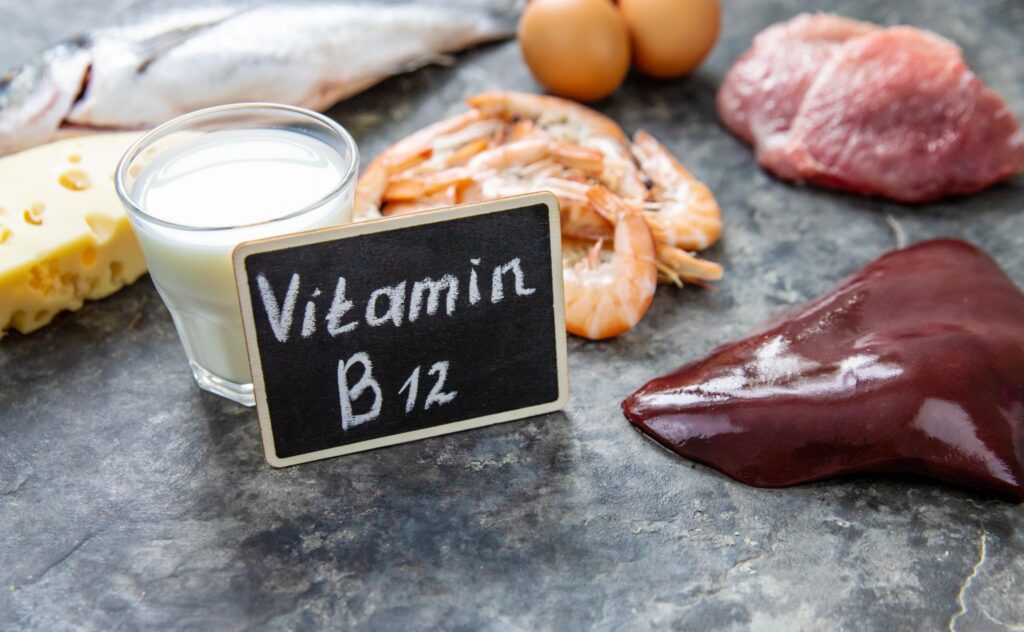
Vitamin B12 is essential for some of the most energy-intensive processes in the body — including the synthesis of red blood cells, DNA replication, and the maintenance of the myelin sheaths that protect nerve fibers. For busy professionals dealing with fatigue, brain fog, or mood instability, B12 deficiency is one of the first nutritional factors worth investigating. Yet because B12 is stored in the liver and deficiency develops gradually, it often goes undetected for months or years.
◈ Quick Answer: Does Vitamin B12 Really Boost Energy?
Vitamin B12 does not directly stimulate energy like caffeine — but it is essential for producing the red blood cells that carry oxygen to every cell in the body. If you are deficient, correcting B12 levels can dramatically improve energy, mental clarity, and mood. In people with normal B12 status, additional supplementation has a more modest effect.
Understanding how B12 functions, who is most at risk of deficiency, and how to choose and time supplementation can make the difference between persistent fatigue and consistent, sustained daily energy.
How Vitamin B12 Supports Energy and Neurological Function
B12 (cobalamin) participates in two key metabolic pathways that directly affect energy and brain function:
- Methionine synthase pathway — B12 is required to convert homocysteine into methionine, which is then used for DNA synthesis, neurotransmitter production, and myelin formation. Elevated homocysteine from B12 deficiency is associated with cognitive decline and cardiovascular risk.[1]
- Methylmalonyl-CoA mutase pathway — B12 converts methylmalonyl-CoA to succinyl-CoA, feeding directly into the citric acid cycle (the mitochondrial energy production process). Without adequate B12, this cycle is impaired and cellular energy output declines.
The result: B12 deficiency leads to megaloblastic anemia (large, dysfunctional red blood cells that carry oxygen poorly) and demyelination of nerve fibers — explaining the fatigue, weakness, and neurological symptoms that accompany deficiency.[2]
Who Is Most at Risk of B12 Deficiency?
B12 is found almost exclusively in animal products, making dietary intake reliable for omnivores — but highly variable for others. Beyond diet, absorption is the more common limiting factor as people age.[3]
| Risk Group | Primary Reason | Recommended Action |
|---|---|---|
| Vegans and vegetarians | No animal products in diet | Supplement consistently; cyanocobalamin or methylcobalamin |
| Adults over 50 | Reduced gastric acid impairs B12 absorption from food | Supplement with crystalline B12 (bypasses digestion requirement) |
| Metformin users | Metformin reduces B12 absorption in the ileum | Monitor annually; supplement if levels drop |
| PPI / antacid users | Low stomach acid reduces B12 release from food proteins | Supplement with sublingual or high-dose oral B12 |
| Post-bariatric surgery | Reduced intrinsic factor production | Sublingual or intramuscular B12 required |
| People with pernicious anemia | Autoimmune destruction of intrinsic factor | Intramuscular injections or very high-dose oral B12 |
Dietary Sources of Vitamin B12
Animal-derived foods are the primary natural source of B12. The richest sources provide well above the daily RDA (2.4 mcg for adults) per serving:
| Food | Serving | B12 (mcg) | % Daily Value |
|---|---|---|---|
| Beef liver (cooked) | 3 oz | ~70 mcg | 2,917% |
| Clams (cooked) | 3 oz | ~84 mcg | 3,500% |
| Salmon (cooked) | 3 oz | ~4.9 mcg | 204% |
| Tuna (canned) | 3 oz | ~2.5 mcg | 104% |
| Beef (ground, cooked) | 3 oz | ~2.4 mcg | 100% |
| Milk | 1 cup | ~1.1 mcg | 46% |
| Egg (whole, cooked) | 1 large | ~0.6 mcg | 25% |
| Nutritional yeast (fortified) | 2 tbsp | ~2.4 mcg | 100% |
*Values approximate. Source: USDA FoodData Central / NIH ODS
For those not meeting needs through diet — or addressing existing deficiency — B12 supplementation is highly effective and very safe. Excess B12 is excreted in urine, so there is no established tolerable upper intake level (UL).
Choosing the Right B12 Supplement Form
B12 comes in several supplemental forms with different absorption mechanisms and clinical applications:[4]
- Methylcobalamin — the active, neurologically active form; preferred for nerve health and cognitive support; does not require conversion in the liver
- Cyanocobalamin — synthetic; stable and inexpensive; converted to active forms in the body; effective for most people
- Adenosylcobalamin — mitochondrial form; supports energy production; often combined with methylcobalamin
- Hydroxocobalamin — long-acting injectable form used clinically for severe deficiency
For most people, methylcobalamin or a combination of methyl + adenosylcobalamin provides the most comprehensive neurological and energy support. Sublingual forms dissolve under the tongue and absorb directly into the bloodstream, bypassing digestive absorption limitations — making them ideal for people with absorption issues.
B12 fits naturally into a broader daily wellness framework. For a full picture of how to structure your supplement routine, see our guide on building a balanced daily wellness routine. Those dealing with persistent energy issues should also review understanding nutritional gaps in modern diets, as B12 deficiency rarely exists in isolation.
Recognizing Symptoms of B12 Deficiency
Because B12 is stored in the liver, deficiency develops slowly — often over 3–5 years. Early and late symptoms include:[5]
- Early signs: unusual fatigue, reduced concentration, mild depression or irritability, tingling in hands or feet
- Progressive symptoms: memory difficulties, balance problems, weakness, pale or yellowish skin
- Advanced deficiency: megaloblastic anemia, significant neurological damage (which may be only partially reversible)
A simple blood test measuring serum B12 (and ideally methylmalonic acid + homocysteine as functional markers) can confirm status. Normal serum B12 is typically 200–900 pg/mL, though many practitioners consider levels below 400 pg/mL as functionally suboptimal.
Frequently Asked Questions
Will B12 supplements give me more energy if I’m not deficient? ▼
Probably not significantly. B12 supports energy metabolism by enabling red blood cell production and the citric acid cycle, but supplementing beyond adequate levels does not typically produce a noticeable energy boost in people who are not deficient. The energy benefit is most pronounced in people correcting an actual deficiency — who often report dramatic improvement in vitality and mental clarity within weeks.
How much B12 should I take daily? ▼
The RDA for adults is 2.4 mcg/day. However, supplements are typically sold in much higher doses (500–1,000 mcg or more) because oral absorption of B12 depends on intrinsic factor, which is saturable. Only about 1.5–2 mcg can be absorbed via this mechanism per dose. High-dose oral supplements (500–1,000 mcg) work partly through passive diffusion at about 1% of the dose — bypassing the intrinsic factor limitation. For general prevention, 500 mcg/day oral is common and effective.
Is there a difference between sublingual and regular B12 tablets? ▼
Sublingual B12 dissolves under the tongue and absorbs directly through the oral mucosa into the bloodstream, bypassing the digestive system entirely. This is particularly valuable for people with low stomach acid, digestive disorders, or absorption issues. Studies show sublingual B12 is equally effective to intramuscular injections for correcting deficiency in most people without intrinsic factor deficiency.
Can B12 deficiency cause depression? ▼
There is a documented association between low B12 and depressive symptoms. B12 is required for synthesizing S-adenosyl methionine (SAMe), which supports serotonin and dopamine production. Elevated homocysteine from B12 deficiency is also independently associated with cognitive decline and depression risk. Correcting B12 deficiency does not treat clinical depression independently, but it removes a nutritional contributor that may be worsening symptoms.
Is methylcobalamin better than cyanocobalamin? ▼
Methylcobalamin is the bioactive form that the body uses directly — it does not require hepatic conversion. It may be preferable for neurological applications and for people with MTHFR gene variants that impair cobalamin metabolism. Cyanocobalamin is well-studied, more stable, and less expensive — and effectively raises serum B12 in most people. For general use, either is effective; for those with absorption concerns or neurological symptoms, methylcobalamin is typically recommended.
Conclusion
Vitamin B12 is a foundational nutrient for sustained energy, sharp cognition, and neurological integrity — yet deficiency is common, slow to develop, and often unrecognized. For busy professionals experiencing unexplained fatigue or brain fog, checking B12 status is a straightforward first step. Supplementing with methylcobalamin or sublingual B12 is safe, inexpensive, and highly effective — particularly for those at elevated risk due to age, dietary pattern, or medication use. Combined with a comprehensive daily wellness routine including magnesium, vitamin D, and omega-3s, B12 contributes to the nutritional foundation that sustained performance demands.
Sources
- Tangney CC, et al. Vitamin B12, cognition, and brain MRI measures. Neurology. 2011. PubMed.
- Vitamin B12 — Health Professional Fact Sheet. National Institutes of Health, Office of Dietary Supplements.
- Stabler SP. Vitamin B12 Deficiency. N Engl J Med. 2013. PubMed.
- Butler CC, et al. Oral vitamin B12 versus intramuscular injections for B12 deficiency. Fam Pract. 2006. PubMed.
- Vitamin Deficiency Anemia. Mayo Clinic.