
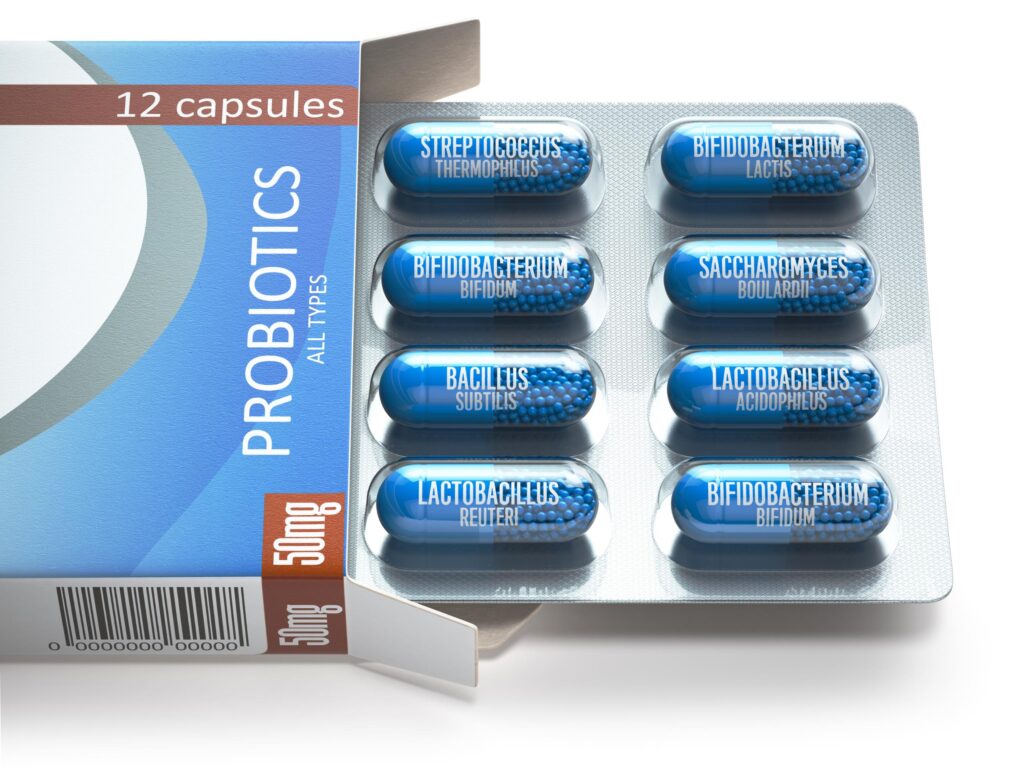
The gut microbiome — the vast community of trillions of bacteria, fungi, and other microorganisms living in the digestive tract — has emerged as one of the most influential systems in human health. Research over the past two decades has revealed its connections to immune regulation, mental health, metabolic function, and even cardiovascular wellness. Probiotics, defined as live microorganisms that confer a health benefit when consumed in adequate amounts, represent one of the primary tools for supporting microbiome balance.
◈ Quick Answer: Do Probiotic Supplements Actually Work?
Yes, for specific applications. Probiotics have strong clinical evidence for preventing antibiotic-associated diarrhea, managing IBS symptoms, and reducing acute infectious diarrhea duration. Evidence for immune modulation, mood support, and metabolic health is growing. Benefit depends heavily on the specific strain, dose, and the individual’s existing microbiome.
Understanding which probiotic strains do what — and how to choose a quality supplement — helps translate the science into practical gut health support.
How Probiotics Support Gut Balance
The gut microbiome exists in a dynamic equilibrium that can be disrupted by antibiotics, poor diet, stress, illness, and aging. Probiotics support microbiome balance through several mechanisms:[1]
- Competitive exclusion — beneficial bacteria occupy mucosal surfaces and receptor sites, preventing pathogenic bacteria from establishing colonies
- Short-chain fatty acid (SCFA) production — fermentation of dietary fiber by probiotic bacteria produces butyrate, propionate, and acetate, which nourish colonocytes and reduce intestinal inflammation
- Immune modulation — gut bacteria interact with intestinal immune cells (GALT — gut-associated lymphoid tissue), representing approximately 70% of the body’s immune system
- pH regulation — lactic acid produced by Lactobacillus species lowers gut pH, inhibiting growth of acid-sensitive pathogens
- Gut-brain axis communication — gut bacteria produce neurotransmitter precursors (including ~95% of the body’s serotonin) that influence mood and stress response
Key Probiotic Strains and Their Specific Benefits
Not all probiotics are interchangeable. Benefits are strain-specific — meaning a specific documented benefit applies to that strain and cannot be generalized to other probiotics under the same genus or species name.[2]
| Strain | Evidence-Based Benefits | Typical Dose |
|---|---|---|
| Lactobacillus rhamnosus GG | Antibiotic-associated diarrhea, traveler’s diarrhea, childhood eczema | 10–20 billion CFU |
| Lactobacillus acidophilus NCFM | IBS, lactose intolerance, vaginal health | 1–10 billion CFU |
| Bifidobacterium longum BB536 | Allergy reduction, immune support, constipation | 5–10 billion CFU |
| Lactobacillus plantarum 299v | IBS, bloating, abdominal pain | 10–20 billion CFU |
| Saccharomyces boulardii | C. diff prevention, traveler’s diarrhea, antibiotic protection | 500 mg–1g (5–10 billion CFU) |
| Bifidobacterium infantis 35624 | IBS symptom reduction (bloating, gas, urgency) | 1–10 billion CFU |
| Lactobacillus reuteri DSM 17938 | Infant colic, H. pylori support, bone density | 100 million–1 billion CFU |
Fermented Foods vs. Probiotic Supplements
Fermented foods represent the traditional, whole-food source of beneficial microorganisms. Regular consumption of fermented foods is associated with increased microbiome diversity — a key marker of gut health resilience.[3]
| Fermented Food | Approximate CFU | Key Strains |
|---|---|---|
| Yogurt (live cultures) | 10 million–1 billion/serving | L. bulgaricus, S. thermophilus |
| Kefir | 1–10 billion/cup | Mixed Lactobacillus + yeasts |
| Sauerkraut (unpasteurized) | Up to 10 billion/½ cup | Mixed Lactobacillus species |
| Kimchi | Up to 1 billion/serving | L. kimchii, mixed Lactobacillus |
| Miso | Low after fermentation | Various; prebiotic benefits remain |
| Kombucha | Variable; often low | Mixed; yeast dominant |
*CFU counts vary by product and processing. Pasteurized versions contain few or no live organisms.
Probiotic supplements offer standardized doses and specific clinically-studied strains — particularly useful for therapeutic purposes (post-antibiotic recovery, IBS management). Fermented foods provide microbial diversity and prebiotic compounds that supplements cannot replicate. The most robust gut health strategy combines both approaches.
Gut health also influences nutrient absorption — including magnesium and B12. For a broader picture of how common nutritional gaps connect to gut function, see our guide on nutritional gaps in modern diets. Also, magnesium supports gut motility and is often depleted in people with digestive issues.
How to Choose a Quality Probiotic Supplement
The probiotic supplement market is crowded and quality varies enormously. Key selection criteria:[4]
- Strain identification — look for genus, species, AND strain designation (e.g., Lactobacillus rhamnosus GG, not just “Lactobacillus blend”)
- CFU count at expiry — not at manufacture; 1–10 billion CFU is adequate for general wellness; 10–50 billion for therapeutic use
- Survivability — enteric coating or acid-resistant capsules protect live organisms through stomach acid
- Storage requirements — most require refrigeration; some shelf-stable strains (like S. boulardii and certain Bifidobacterium) are more temperature-stable
- Third-party verification — USP, NSF, or independent lab testing confirms live organism count matches label claims
Frequently Asked Questions
How long do probiotics take to work? ▼
For acute digestive issues like antibiotic-associated diarrhea, probiotic effects can be seen within 1–2 days when started concurrently with antibiotics. For IBS symptom improvement, most clinical trials show measurable benefits within 4–8 weeks of consistent use. General microbiome improvements take 4–12 weeks. Probiotics require consistent, ongoing supplementation — they do not permanently colonize the gut and their effects diminish when discontinued.
Should I take probiotics during or after antibiotics? ▼
Both — ideally during and after. Starting probiotics at the beginning of antibiotic treatment (separated by 2 hours from each antibiotic dose) reduces the risk of antibiotic-associated diarrhea by approximately 50%. Continue for at least 2–4 weeks after completing antibiotics to support microbiome recovery. Saccharomyces boulardii is a yeast-based probiotic resistant to antibiotics and is particularly effective during antibiotic courses.
Can probiotics help with bloating and gas? ▼
Yes, for many people. Lactobacillus plantarum 299v and Bifidobacterium infantis 35624 have the strongest evidence for reducing IBS-related bloating and abdominal discomfort. Paradoxically, some people experience increased bloating when first starting probiotics — this is usually transient (lasting 1–2 weeks) as the microbiome adjusts. Starting with a lower dose and gradually increasing can minimize this adjustment effect.
Are there people who should avoid probiotics? ▼
Most healthy adults can safely take probiotics. However, caution is advised for immunocompromised individuals (those on chemotherapy, organ transplant recipients, or people with serious immune conditions), as rare cases of probiotic-derived infections have been reported. People with serious underlying illnesses, central venous catheters, or cardiac valve conditions should consult their physician before supplementing. For healthy adults, probiotic supplements are considered safe at standard doses.
What is the difference between probiotics and prebiotics? ▼
Probiotics are live beneficial microorganisms. Prebiotics are non-digestible food fibers (like inulin, FOS, and pectin) that selectively feed beneficial gut bacteria — acting as fertilizer for the microbiome. Prebiotics are found in onions, garlic, leeks, asparagus, bananas, and oats. Synbiotics are products that combine both. Consuming adequate dietary fiber is the most sustainable way to support probiotic bacteria — supplementing probiotics without adequate prebiotic intake significantly limits their effectiveness and persistence.
Conclusion
The gut microbiome is central to health in ways science is still uncovering — from immune regulation to mental health to nutrient absorption. Probiotic supplements, when chosen by strain and used consistently at adequate doses, offer documented benefits for digestive conditions, post-antibiotic recovery, and immune support. Combined with a fiber-rich diet, fermented foods, and attention to other gut-supportive nutrients like magnesium, a thoughtful probiotic strategy contributes meaningfully to long-term digestive balance and systemic wellness.
Sources
- Ozen M, Dinleyici EC. The history of probiotics: the untold story. Benef Microbes. 2015. PubMed.
- Azad MAK, et al. Probiotic species in the modulation of gut microbiota: an overview. Biomed Res Int. 2018. PubMed.
- Wastyk HC, et al. Gut-microbiota-targeted diets modulate human immune status. Cell. 2021. PubMed.
- Probiotics and prebiotics: What you should know. Mayo Clinic.