
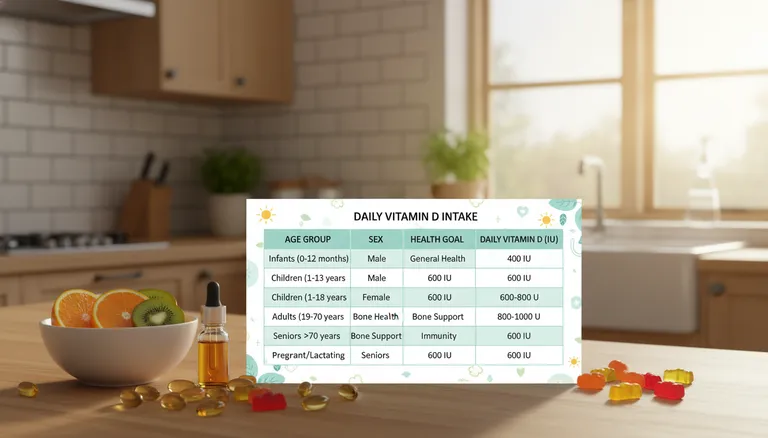
Getting the right amount of a certain sunshine nutrient is a cornerstone of good health. It supports your body in fundamental ways, from building sturdy bones to powering your immune defenses.
Experts, like those at the Children’s Hospital of Philadelphia, confirm its role is essential. This nutrient is not just another item on a label. It’s a key player in your long-term wellness.
Figuring out your personal needs can feel confusing. Age, lifestyle, and specific health goals all change the equation. Our guide is here to cut through the noise.
We provide clear, research-backed information on daily intake. You’ll learn how to tailor a plan that fits your unique body and life. Let’s explore what your system truly requires to thrive.
Quick Answer
Most adults need 600–800 IU of vitamin D per day. Children aged 1–70 require 600 IU daily, while adults over 71 need 800 IU. Breastfed infants need 400 IU. People with deficiency, limited sun exposure, or absorption issues may need higher doses — always consult a doctor before exceeding 4,000 IU/day.
Key Takeaways
- This essential nutrient is crucial for maintaining strong bones and a robust immune system.
- Your ideal daily dosage is not a one-size-fits-all number; it varies by individual factors.
- Age, biological sex, and personal health objectives all influence how much you need.
- Navigating nutritional requirements is easier with evidence-based, clear guidance.
- Proper intake supports your body’s core functions and impacts your future wellness.
- Understanding your personal needs is a vital step toward optimal health.
Introduction to Vitamin D and Its Importance
This fat-soluble compound is unique because your skin can produce it with help from sunlight. It’s a crucial nutrient that your body relies on for several core functions.
Senior Clinical Dietitian Caroline Lynch notes we can get it from food or make it ourselves. This dual pathway makes it special in the world of nutrition.
What is Vitamin D?
It exists in two primary forms. Vitamin D2 comes from plant sources like mushrooms. Vitamin D3 comes from animal-based foods and is made by your skin in sunlight.
Both forms contribute to your physical wellness. Your system converts them into an active hormone that drives essential processes.
| Form | Primary Source | Key Role in the Body |
|---|---|---|
| Vitamin D2 (Ergocalciferol) | Plant-based foods (e.g., fortified foods, mushrooms exposed to UV light) | Supports overall nutrient status and can be used for supplementation. |
| Vitamin D3 (Cholecalciferol) | Animal products (e.g., fatty fish, egg yolks) and synthesis in skin from sun exposure | The preferred form for raising and maintaining blood levels of the active vitamin. |
| Active Form (Calcitriol) | Produced by the kidneys from D2 or D3 | Directly regulates calcium absorption, bone health, and immune function. |
Why Vitamin D Matters for Your Health
Its most famous job is aiding calcium and phosphorus absorption. This is fundamental for building and maintaining strong bones.
The benefits extend far beyond your skeleton. It is essential for proper muscle function and supports a robust immune system throughout life.[1]
Research confirms its role in cellular communication and inflammation control. Getting enough of this vitamin is a key part of supporting your long-term wellness.
Recommended Daily Vitamin D Dosage by Age and Sex
Official guidelines provide a clear starting point for your daily intake of this essential nutrient. These standards help most people meet their baseline needs for strong bones and wellness.
Guidelines for Different Age Groups
National experts like the Institute of Medicine set the benchmarks. In 2011, they updated the Recommended Dietary Allowances to better support bone health across a lifetime.
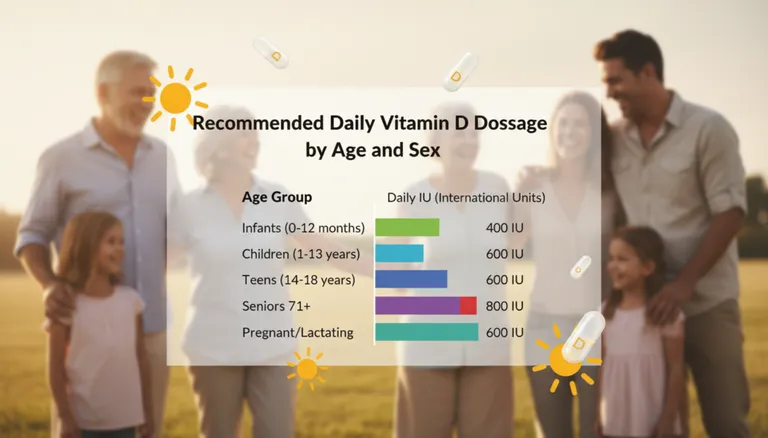
For individuals from age 1 to 70, the RDA is 600 international units (IU). Older adults aged 71 and above need 800 IU daily. This increase addresses changing physiological needs over the years.[9]
| Age Group | Recommended Daily Allowance (IU) | Key Notes |
|---|---|---|
| Infants (0-12 months) | 400 IU* | Adequate Intake (AI) for healthy development. |
| Children & Adults (1-70 years) | 600 IU | RDA for maintaining bone health and normal calcium absorption. |
| Older Adults (71+ years) | 800 IU | Higher RDA to support aging bones and muscle function. |
*For infants, this is an Adequate Intake (AI) level, as an RDA has not been established.
Special Considerations for Men and Women
The baseline RDAs are generally the same for men and women. However, personal needs can differ.
Specific health conditions, hormonal factors, or life stages may alter requirements. Consulting a doctor is the best way to tailor your intake plan.
How Much Vitamin D Per Day
Your personal needs for this essential nutrient are shaped by a variety of individual factors. Beyond age and sex, other elements play a crucial role in determining your optimal intake.
Factors Influencing Your Dosage Needs
Several key aspects affect how your body maintains healthy levels. Your skin pigmentation, where you live, and daily sun habits all matter.
Dr. Michael A. Levine notes that medications like anticonvulsants can interfere with your body’s nutrient absorption. This is a critical point for those on long-term prescriptions.
Lifestyle choices, such as time spent outdoors, directly impact your status. Conditions like obesity or celiac disease also alter how your system processes this compound.
| Factor | Impact on Vitamin D Levels | Personal Consideration |
|---|---|---|
| Skin Pigmentation | Darker skin produces less vitamin D from sunlight. | May require more sun exposure or supplementation. |
| Geographic Location | Living farther from the equator reduces sun intensity. | Seasonal changes can lead to lower levels in winter. |
| Sun Exposure Habits | Regular, moderate sun helps, but consistency varies. | Use of sunscreen and clothing affects synthesis. |
| Certain Medications | Drugs like anticonvulsants can impair metabolism. | Consult a doctor to adjust dosage if needed. |
| Health Conditions | Obesity or celiac disease may reduce absorption. | Personalized approach is essential for optimal health. |
Comparing Sun Exposure and Supplementation
Sunlight is a natural source, but it’s often unreliable. It’s hard to measure exactly how much nutrient you get from the sun each day.
Supplementation offers a controlled way to meet your targets. For many, combining both methods works best to maintain steady levels.
Vitamin D from Natural Sun Exposure and Diet
Your diet and time spent outdoors are two primary ways to obtain this essential compound. Balancing these sources helps maintain steady levels for overall wellness.
The Role of Sunlight in Vitamin D Production
Your skin can create this nutrient when exposed to the sun. Spending 15 to 30 minutes outside with arms and legs uncovered often stimulates significant production.[4]
Dr. Michael A. Levine suggests children get 10 to 15 minutes of sun time before applying sunscreen. This brief window can generate a substantial amount.

Sunscreen protects your skin from damage but may reduce synthesis. Using it after a short, unprotected period is a smart balance.
Foods Rich in Vitamin D and Fortified Options
Few whole foods are naturally high in this vitamin. Fatty fish like salmon, tuna, and sardines are excellent sources.[7]
Many common foods are fortified to help you meet your needs. A glass of fortified milk or orange juice can be a practical daily addition.
| Food Type | Example | Approximate Vitamin D Content (IU per serving) |
|---|---|---|
| Natural Source | Salmon (3 oz cooked) | 450 IU |
| Natural Source | Canned Tuna (3 oz) | 150 IU |
| Natural Source | Sardines (2 sardines) | 250 IU |
| Fortified Option | Fortified Milk (1 cup) | 120 IU |
| Fortified Option | Fortified Orange Juice (1 cup) | 100 IU |
| Fortified Option | Fortified Breakfast Cereal (1 serving) | 40 IU |
Combining sensible sun exposure with these dietary choices supports a consistent intake.
Role of Vitamin D in Bone Health and Beyond
Strong, resilient bones rely heavily on a specific nutrient’s ability to partner with a key mineral. While this function is its most famous job, scientists are actively exploring other potential wellness benefits.
Enhancing Calcium Absorption for Strong Bones
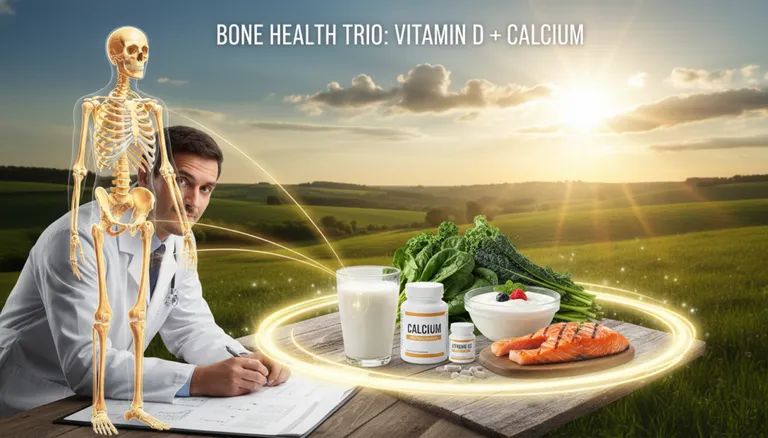
This compound acts as a crucial gatekeeper in your gut. It enables your body to absorb the mineral calcium from the foods you eat.
That absorbed calcium is then used to build and maintain dense, healthy bones. Without sufficient levels of this nutrient, calcium absorption drops significantly.[1] For more, see Vitamin D: Benefits, Dosage, Food Sources, and Deficiency Signs.
This can weaken the skeletal structure over time, highlighting the direct link to lifelong bone health.
Other Health Benefits of Adequate Vitamin D Levels
Research often examines links between low levels and chronic disease risk. However, clinical studies can provide conflicting results.
A 2019 National Institutes of Health study of 2,423 adults showed that daily supplements failed to prevent type 2 diabetes. Other studies have been inconclusive.
Interestingly, a 2020 analysis of nine clinical trials found a 12% reduction in diabetes risk with moderate to high doses. Beyond bones, good levels support nervous system function.[6] For more, see how vitamin K2 works alongside vitamin D for stronger bones.
They also strengthen your body’s defenses against various infectious disease. For more, see vitamin D and immune health support in adults.
Vitamin D Supplementation: When and How to Use Supplements
Knowing when to consider a supplement and how to use it correctly is key to a safe and effective plan.
Identifying the Need for Supplements
Certain groups are more likely to require extra support. Children who spend little time outdoors or have darker skin may need help maintaining good levels year-round.
Breastfed infants require special attention. They need 400 international units of vitamin supplements daily.
An alternative is for the nursing parent to take a higher dose, around 5,000 IU, to enrich their milk. Always talk to your pediatrician before taking any new medicine or supplement.[8]

Dosage Recommendations for Supplement Use
If you are concerned about getting enough, a doctor can assess your needs. Standard over-the-counter options for kids often contain 600 IU, matching the RDA for ages one and up.[3]
Here is a quick guide to common supplement scenarios:
| Group | Typical Daily Supplement Dose | Key Consideration |
|---|---|---|
| Breastfed Infants | 400 IU | Liquid drops are standard; can also be provided via maternal high-dose supplementation. |
| Children (1+ years) & Adults | 600 IU | Common in multivitamins; individual needs may vary based on sun exposure and diet. |
| Adults with Deficiency | Higher doses as prescribed | Requires medical supervision and blood level monitoring to ensure safety and efficacy. |
Starting a regimen of supplements should be a informed decision made with professional guidance. For more, see building a balanced daily wellness routine with vitamins.
Additional Factors Influencing Vitamin D Levels
Your daily habits and environment play a surprisingly large role in your body’s vitamin D status. While intake targets are important, several other elements can quietly shift your personal needs.
Impact of Lifestyle and Sun Exposure Practices
Your time in the sun and the protection you use are major players. Regular, moderate exposure helps, but consistent habits vary widely from person to person.
Dermatologist Hung Doan offers a clear perspective. “There is no safe way to get enough of this vitamin through sun exposure without increasing skin cancer risk,” he notes.
This highlights the need for a balanced approach. Using sunscreen after a brief period outdoors protects your skin while managing synthesis.
Certain health conditions create another hurdle. Issues like Crohn’s disease or liver disease can prevent people from effectively using the nutrient they consume.
Some common medications also interfere. Drugs like glucocorticoids and anticonvulsants can disrupt how your body metabolizes this essential vitamin.[5] For more, see magnesium supplements that support vitamin D activation.
The good news is that these challenges can be managed. Even individuals living in extreme environments, like the North Pole, maintain healthy levels through diet and targeted supplements.
| Factor | How It Affects Levels | Practical Consideration |
|---|---|---|
| Lifestyle & Sun Habits | Directly controls natural synthesis in the skin. | Balance short, unprotected sun time with consistent sunscreen use. |
| Specific Health Conditions | May impair absorption or conversion of the nutrient. | Work with a doctor to adjust intake strategies. |
| Certain Medications | Can block or accelerate the metabolism of the vitamin. | Review all prescriptions with a healthcare provider. |
| Extreme Geography | Eliminates natural sun synthesis for months. | Rely on fortified foods and supplements to sustain levels. |
Understanding Vitamin D Toxicity and Safety Limits
Navigating the fine line between sufficiency and excess requires knowledge of toxicity symptoms and safe intake levels. While rare, consuming too much of this nutrient through high-dose supplements can lead to serious health issues.
Symptoms and Risks of Overconsumption
The primary danger is hypercalcemia, a condition marked by excessive calcium in the blood. This can cause:
- Nausea, vomiting, and poor appetite
- Weakness and frequent urination
- Confusion and pain from kidney stones
Kidney stones are a significant concern. An increased risk exists for both kids and adults when intake is consistently above safe limits.
Parents should carefully calculate the total amount their children get from fortified milk, food, and supplements. The National Institutes of Health states the safe upper limit for adults is 4,000 international units per day.[5]
Monitoring your intake is essential. Exceptionally high blood levels have not been proven to provide extra health benefits.
Vitamin D Testing and Blood Level Monitoring
A blood test can provide a clear window into your nutritional health. It reveals levels that diet and sun alone might not show.
Who Should Consider Getting Tested?
Routine screening isn’t needed for all healthy children or adults. However, certain situations call for a check.
People taking specific medicine, like anticonvulsants, should consider it. Those with conditions affecting fat absorption are also candidates.
Interpreting Blood Test Results for Optimal Health
The standard test measures 25(OH)D in your blood. For strong bones, most specialists agree a level above 20 ng/mL is adequate.[2]
Some labs flag results below 30 ng/mL as a vitamin deficiency. The clinical meaning often depends on your personal health goals.
Proper monitoring helps maintain the right balance of calcium and this essential vitamin for wellness over the years. It’s a tool to prevent a true deficiency.
Conclusion
Your journey to maintaining strong bones and a healthy immune system is a personal one. Consistent, adequate intake of this key nutrient supports your body’s fundamental systems for long-term health.
While sensible sun exposure and a diet with certain foods help, many people may need supplements to ensure they are getting enough. This is especially true for children or those using sunscreen regularly.
Always consult your doctor before taking high doses, particularly if you have underlying conditions or use specific medications. Professional guidance ensures safety and effectiveness.
The goal is to reach your recommended daily intake, not to chase extremely high levels. More is not always better for your body. For more, see vitamin benefits, dosages, and safety tips.
By balancing your diet, sun safety, and expert advice, you can manage your nutrient intake wisely for years to come. This supports lifelong wellness and helps you truly thrive. Read our complete guide to how much vitamin D you should take daily based on your age and needs[7]
Frequently Asked Questions
What is the recommended daily amount for an average adult?▼
Can I get enough from sunlight and food alone?▼
Who is most at risk for a deficiency?▼
How do I know if I need a supplement?▼
Are there risks from taking too much?▼
Related Reading
Sources
- NIH Office of Dietary Supplements — Vitamin D Fact Sheet
- NIH PubMed — Vitamin D Deficiency and Supplementation (PMC3356951)
- Mayo Clinic — Vitamin D: Overview
- Harvard Health — Vitamin D and your health
- PubMed — Vitamin D Toxicity: Clinical Perspectives (PMID 20941377)
- PubMed — Vitamin D Supplementation and Diabetes Risk Meta-analysis (PMID 31127794)
- Remedy’s Nutrition — How Much Vitamin D Should You Take Daily
- Healthline — How Much Vitamin D Should You Take?
- WebMD — Vitamin D Supplement Guide
- PMC — Vitamin D and Calcium: Age-Based Requirements (PMC6566188)