

Figuring out the ideal moment for your daily dose is a top question for anyone managing their wellness. People want to get the most from their health regimen.
This curiosity makes perfect sense. When you consume a supplement can affect how your body processes it. The goal is to support long-term physical and mental well-being.
Experts frequently highlight that the most effective schedule is the one you remember every day. Building a consistent habit often outweighs searching for a perfect hour on the clock.
This guide dives into the science behind timing. We'll look at how your daily routine, meals, and even your sleep cycle might play a part. Understanding this helps you avoid the common trap of irregular use and poor nutrient absorption.
Let's explore what research suggests about morning, afternoon, or evening intake. The aim is to help you make a confident, informed choice for your lifestyle.
Quick Answer
The best time to take vitamin D is with your largest meal of the day — ideally breakfast or lunch. Since it's fat-soluble, pairing it with healthy fats (eggs, avocado, nuts) can boost absorption by up to 50%. Most experts recommend morning or midday intake; taking it late at night may interfere with melatonin production in some people. Ultimately, consistency matters more than exact timing — pick a time you'll remember daily.
Key Takeaways
- The timing of your supplement can influence its absorption and effectiveness in your body.
- Establishing a consistent daily habit is more crucial than the specific time of day.
- Your personal schedule and whether you take it with food are important practical considerations.
- Scientific studies provide insights into potential advantages of different times, like morning versus night.
- Proper, regular use helps you sidestep issues like forgetting doses or suboptimal uptake.
- This article offers evidence-based perspectives to optimize your personal health routine.
- The ultimate goal is to find a simple, reliable pattern that works seamlessly for you.
Understanding the Importance of Vitamin D for Health
Beyond just bone support, this essential nutrient acts as a powerful regulator for numerous systems throughout your body. It's foundational for long-term physical and mental well-being. [1]
The Role of Vitamin D in the Body
Think of it less as a simple vitamin and more as a key hormone. It directs crucial processes like calcium absorption for strong bones and teeth.
It also bolsters your immune defenses, helping you fight off common colds and infections. Nutrition expert Brigitte Zeitlin, RD, highlights its broad impact. [4]
Vitamin D is an essential nutrient with powerful antioxidant benefits for the body.
For most adults, a daily intake of 600 IU helps maintain these vital functions. This consistent support is key for overall human health.
Overview of Vitamin D Deficiency and Benefits
Vitamin deficiency is surprisingly common worldwide. Low levels can lead to increased inflammation and weaken your body's resilience. [13]
This state raises your risk for serious conditions, including certain types of cancer, cardiovascular disease, and type 2 diabetes.
Conversely, maintaining good levels offers clear benefits. It helps regulate blood sugar and significantly reduces the risk of metabolic issues. See our complete guide to vitamin D benefits, sources, and deficiency signs for a full breakdown.
Addressing a shortfall early is crucial. The nutrient is involved in so many processes that its impact on systemic health is profound.
Factors Influencing Vitamin D Absorption
Not all supplement routines are created equal. Certain variables significantly affect how your system absorbs this key nutrient.
Understanding these factors helps you get the most from your health regimen.
Fat-Solubility and the Importance of Dietary Fats
Vitamin D is a fat-soluble nutrient. This means it dissolves in dietary fat, not water. [2]
Your body needs fat from foods to carry it into the bloodstream. Without it, absorption can be poor.
Great sources include avocados, nuts, and seeds. Fatty fish like salmon or sardines are also excellent. For a deeper look at supplement types, dosing strategies, and safety considerations, visit this [12] guide to vitamin D supplements, types, dosage, and safety. For a full breakdown of the best natural and fortified vitamin D food sources and how much sun exposure you actually need, see our dedicated natural sources guide.
Impact of Meal Composition on Absorption
What you eat with your supplement matters. A meal with healthy fats creates the right environment. [3]
Research confirms pairing it with a high-fat meal boosts uptake. This simple step ensures your body can use what you consume.
| Food | Type of Fat | Approximate Fat per Serving |
|---|---|---|
| Avocado (½ medium) | Monounsaturated | 15 grams |
| Almonds (1 oz) | Monounsaturated & Polyunsaturated | 14 grams |
| Salmon (3 oz cooked) | Omega-3 Polyunsaturated | 12 grams |
| Whole Egg (1 large) | Saturated & Monounsaturated | 5 grams |
Choosing the right meal companions is a powerful strategy. It turns your daily routine into an optimized process for long-term wellness.
The Role of Meal Timing in Supplement Effectiveness
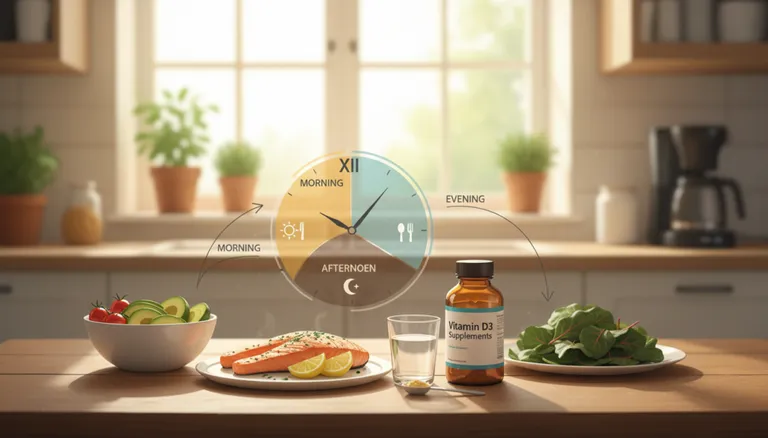
Research consistently points to one simple factor that boosts nutrient uptake: your mealtime. When you consume your capsule matters just as much as what you eat with it.
Taking Vitamins with Meals for Enhanced Absorption
Scientific evidence strongly supports pairing your dose with food. A study involving 17 participants showed that consuming it with the largest meal increased blood levels by 50% over two to three months. [2]
Another 2014 study of 50 older adults found that taking the supplement alongside a high-fat meal boosted absorption by 32% within just 12 hours. [3] This highlights how fat content and meal size work together.
Consistent timing helps your body maintain stable nutrient levels. This is especially vital for anyone managing a deficiency. Planning your intake around your largest food intake is a straightforward, effective strategy for optimal value. For evidence-based supplement information about vitamin D dosage recommendations by age and health status, including how timing interacts with dosage, see our dedicated guide.
Morning Supplementation: Kick-Start Your Day
Many find that incorporating health supplements into their morning schedule is the easiest way to stay consistent. Nutritionist Jessica Cording, RD, recommends this approach because it often fits seamlessly into your daily getting-ready ritual. [8]

For many, morning is the best time to take this supplement because it aligns with their natural routine. Choosing the right time to take it can make your habit stick.
Incorporating vitamin D into a breakfast routine
Pairing your capsule with your first meal is a smart move. Making it part of your breakfast ritual ensures you are more likely to remember it compared to later in the day.
Consuming it with breakfast foods that contain healthy fats, like eggs or avocado, can further support absorption. This simple habit turns your a.m. routine into a powerful wellness foundation.
Strategies for remembering your supplement
Simple tactics can make consistency effortless. Storing your bottle near the coffee maker or dining table acts as a strong visual cue.
Setting a recurring phone alarm is another effective method. Using a weekly pillbox can also help you organize your intake while you enjoy your morning meal.
| Strategy | How It Helps | Consistency Score (1-5) |
|---|---|---|
| Pillbox Organizer | Tracks daily doses visually | 5 |
| Phone Alarm | Provides an audible reminder | 4 |
| Visual Cue (e.g., near coffee maker) | Triggers habit through routine | 4 |
| Habit Stacking (with breakfast) | Links dose to an existing habit | 5 |
These practical steps help you build a reliable pattern. The goal is to make your health regimen automatic and stress-free.
Best Time to Take Vitamin D: Research Insights
Scientific inquiry into supplement timing offers valuable clues, yet no universal rule has emerged. The available evidence points to personal habit as the cornerstone of effectiveness.

Current research has not established a single ideal moment for everyone. Individual needs and daily routines vary too much for a one-size-fits-all answer. [5]
Review of key studies and their findings
Several studies have explored this topic. Some suggest morning consumption is convenient and easy to remember. [11]
However, the most crucial factor remains consistency in your daily schedule. Your body thrives on regular support.
Other analyses show that effectiveness depends more on fat intake than the specific hour. Pairing your dose with a meal rich in healthy fats significantly boosts absorption. Understanding how much sun you need for vitamin D by skin type and season can also help you gauge how much supplementation you actually require.
By prioritizing a reliable routine, you ensure your system gets the nutrient it needs. This practical approach supports overall wellness.
Afternoon and Evening Supplementation: Pros and Cons
Taking your supplement later in the day presents a different set of considerations. For many, a midday or evening schedule is the most practical choice.

Potential impacts on sleep and melatonin production
A 2021 scientific review notes this nutrient may influence melatonin production. [7] This hormone is critical for regulating your body's natural sleep-wake cycle.
Registered dietitian Sonya Angelone explains the limited evidence. She does not usually recommend taking supplements right before bedtime.
The time you take it could potentially affect your rest. Some experts advise against consuming it with your evening medications or right before bed.
If you choose an afternoon schedule, ensure it doesn't interfere with falling asleep later. Pay attention to any changes in your rest after starting your regimen.
| Consideration | Afternoon (e.g., with lunch) | Evening (e.g., with dinner) |
|---|---|---|
| Habit Consistency | Fits a midday routine; easy to remember with a meal. | Integrates with dinner, a consistent daily anchor. |
| Meal Pairing for Absorption | Often paired with a substantial meal containing healthy fats. | Typically paired with the largest meal of the day. |
| Potential Sleep Impact | Lower risk of interfering with melatonin and sleep onset. | Higher potential to affect sleep quality for some individuals. |
Finding your ideal window is about personal fit. Monitor your energy and rest to see what works for your body.
How Vitamin D Affects Sleep and Daily Energy Levels
The connection between your nutrient levels and how you feel is more significant than you might think. This essential vitamin plays a key role in regulating both rest and vitality.
Understanding the relationship between vitamin D and sleep
A 2024 research review indicates that supplementation may improve sleep quality for many people. [6] Adequate levels help regulate your internal clock, supporting deeper, more restorative rest.
The time of day you consume it may influence these benefits, especially if you are deficient and experience fragmented rest.

Balancing supplementation with your daily routine
Your system stores excess vitamin D in fat cells, releasing it as needed throughout the day to maintain consistent energy. [10]
Finding a balance in your routine supports both physical stamina and long-term rest health. If you often feel low-energy, adding this nutrient can provide a boost to mood and mental well-being.
The goal is to integrate supplementation seamlessly into your schedule, ensuring your body gets the support it requires for optimal function at any time.
Practical Tips for Consistent Vitamin D Supplementation
Personalized guidance from a healthcare expert can transform your supplement strategy from guesswork to precision. A solid plan considers your unique diet, lifestyle, and existing health metrics.
Careful Dosing and Timing Strategies
Pairing your capsule with a meal containing healthy fats remains a key tactic. This simple step significantly improves how your body uses the nutrient.
For individuals following plant-based diets, attention is especially important. Registered dietitian Keri Gans, RD, highlights this group's potential needs.
People who do not eat many animal products may need a daily supplement.
Consistency is your greatest ally. Choose a moment in your day that you can reliably remember, like with breakfast or dinner. Check our trusted guide to daily vitamin D dosage guidelines by age and sex to make sure you're taking the right amount. And for more on how magnesium interacts with your regimen, read about magnesium's role in activating vitamin D and supporting sleep.
Consulting Healthcare Professionals for Personalized Advice
Always speak with your doctor before starting any new regimen. They can order a simple blood test to check your current vitamin levels. [9]
A result showing 25-hydroxyvitamin D greater than 30 ng/mL is considered healthy by the NIH. [1] If a deficiency is found, your doctor can recommend the right dosage for you.
This consultation is vital if you take other medications. Your healthcare provider ensures everything works together safely for your long-term health.
By collaborating with a professional, you create a sustainable, effective plan. This partnership helps you maintain optimal wellness with confidence. For science-backed guides to vitamins and supplements, visit our comprehensive vitamin and supplement resource library.
Conclusion
Ultimately, the most effective regimen is the one you can stick with day after day. Finding your optimal moment is a personal process that should prioritize consistency above all.
While studies confirm taking your supplement with a meal boosts absorption, there is no universal rule for everyone. Your daily schedule and preferences are key.
Always consult with a healthcare provider to ensure your intake is safe and aligns with your specific wellness goals. This professional guidance is invaluable.
By staying consistent with your chosen routine, you can effectively support your long-term physical and mental well-being. The right schedule is simply the one that works reliably for you.
Frequently Asked Questions
Why is vitamin D important for my body?▼
Vitamin D is a fat-soluble nutrient that acts more like a hormone than a vitamin. It enables calcium absorption for strong bones, supports immune function, regulates muscle function, and helps maintain mental well-being. Deficiency is linked to increased inflammation, weakened immunity, and higher risk of metabolic conditions.
Should I take my supplement with a meal?▼
Yes. Vitamin D is fat-soluble, meaning it needs dietary fat to be absorbed properly. Taking it with a meal containing healthy fats — like eggs, avocado, nuts, or fatty fish — can increase absorption by 32–50%. Taking it on an empty stomach significantly reduces its effectiveness.
Is morning the best time to take vitamin D?▼
Morning is generally recommended because it fits most people's daily routines and makes it easier to pair with a fat-containing breakfast. Some early research suggests that taking vitamin D late at night may interfere with melatonin production in sensitive individuals, so morning or midday is the safer default choice.
Can taking vitamin D in the evening affect my sleep?▼
There is emerging evidence that high-dose vitamin D taken late in the evening may suppress melatonin production in some people, potentially disrupting sleep onset. If you notice changes in sleep quality after starting supplementation, try shifting your dose to morning or early afternoon.
How do I remember to take it consistently?▼
Consistency is more important than perfect timing. Effective strategies include: pairing it with a daily habit (morning coffee, breakfast, brushing teeth), keeping the bottle next to your breakfast foods as a visual cue, setting a recurring phone alarm, or using a weekly pillbox to track daily doses.
Should I talk to my doctor before starting vitamin D?▼
Yes — especially if you take other medications or have health conditions. A doctor can order a 25-hydroxyvitamin D blood test to measure your current levels. The NIH considers 25(OH)D above 30 ng/mL sufficient. If deficient, your doctor can recommend the right dosage and monitor your progress.
Related Reading
Sources
- NIH Office of Dietary Supplements — Vitamin D: Health Professional Fact Sheet
- Mulligan GB, Bhatt DL. Vitamin D absorption is best when taken with fat (2010)
- Dawson-Hughes B, Harris SS, et al. High-fat meal increases vitamin D absorption by 32% (2014)
- WebMD — Vitamin D: Uses, Side Effects, Dosage
- Vitamin D supplementation timing and serum 25(OH)D — PubMed (2021)
- Vitamin D and sleep quality: a 2024 systematic review — PubMed
- Vitamin D and melatonin interaction — PubMed (2021)
- Endocrine Society — Vitamin D
- Mayo Clinic — Vitamin D: Evidence-based Uses and Safety
- NIH Office of Dietary Supplements — Vitamin D: Consumer Fact Sheet
- Harvard Health Publishing — Time for More Vitamin D
- Remedy’s Nutrition — Vitamin D Supplements: Types, Dosage, and Safety
- Vitamin D deficiency: global prevalence and health consequences — PubMed