
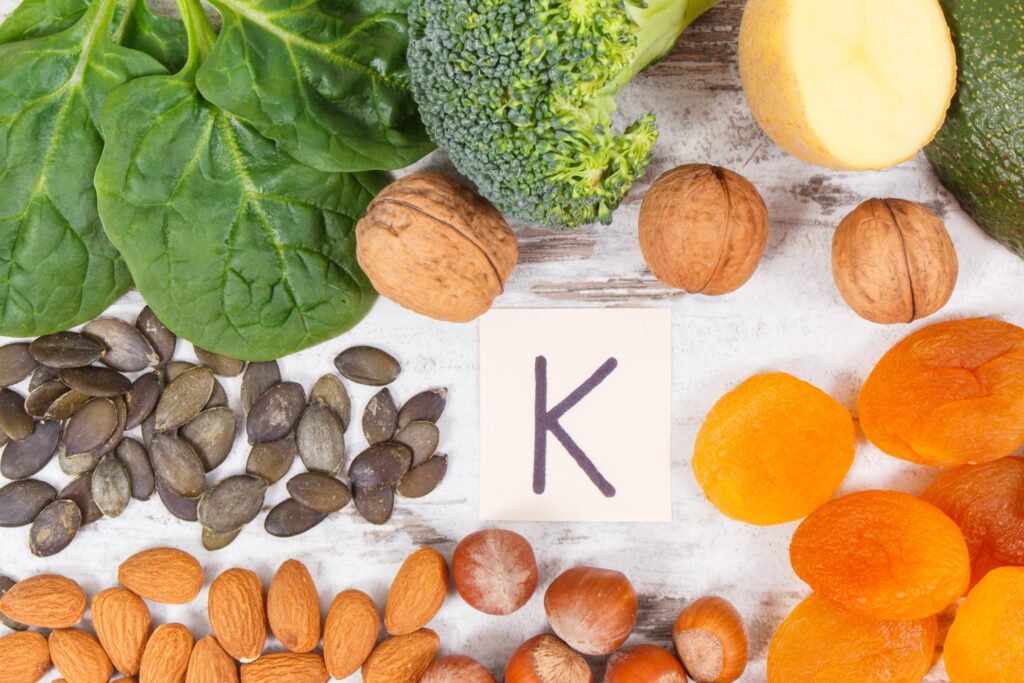
Bone health is often associated with calcium and vitamin D — yet vitamin K is the silent co-factor without which those nutrients can’t do their job properly. Research shows that vitamin K activates the proteins that bind calcium to bone tissue, making it an indispensable nutrient for skeletal strength at every age.
◈ Quick Answer: Does Vitamin K Support Bone Health?
Yes. Vitamin K — particularly K2 (MK-7) — activates osteocalcin, the protein that anchors calcium into bone matrix. Low vitamin K status is associated with reduced bone mineral density and increased fracture risk, especially in older adults.
Modern discussions about wellness increasingly emphasize balanced nutrition that includes a full spectrum of vitamins and minerals. Understanding how each nutrient contributes to bone maintenance helps individuals make smarter dietary and supplementation decisions.
Key Takeaways
- Vitamin K activates osteocalcin and matrix GLA protein — the two proteins that bind calcium to bone tissue and keep it out of arteries
- Without adequate vitamin K, calcium supplementation can accelerate arterial calcification rather than strengthen bones
- Vitamin K2 (MK-7) is the most bioavailable and long-acting form, making it the preferred choice for supplementation over K1
- The standard RDA for vitamin K was set for blood clotting only — it does not account for K2’s distinct role in bone and cardiovascular health
- Natto (fermented soybeans) is the richest dietary source of K2; dark leafy greens provide K1
- Vitamin K works synergistically with vitamin D3 and calcium — taking all three together produces better bone outcomes than any single nutrient alone
Understanding the Biological Function of Vitamin K
Vitamin K is a fat-soluble vitamin that exists in two main dietary forms: K1 (phylloquinone) and K2 (menaquinone). While K1 is primarily involved in blood coagulation, K2 plays the dominant role in bone and cardiovascular metabolism.[1]
Within the body, vitamin K acts as a cofactor for the enzyme gamma-carboxylase, which activates vitamin K-dependent proteins (VKDPs). Two VKDPs are especially relevant to bone health:
- Osteocalcin — synthesized by osteoblasts (bone-building cells); when activated by vitamin K, it binds calcium to the bone mineral matrix
- Matrix Gla Protein (MGP) — prevents calcium from depositing in soft tissues such as arteries and cartilage
Without adequate vitamin K, these proteins remain undercarboxylated and cannot perform their calcium-directing function efficiently. This is why vitamin K sufficiency matters independently of how much calcium or vitamin D you consume.
| Feature | Vitamin K1 (Phylloquinone) | Vitamin K2 (Menaquinone) |
|---|---|---|
| Primary source | Leafy green vegetables | Fermented foods, animal products |
| Main function | Blood clotting | Bone & cardiovascular health |
| Absorption half-life | Short (~1–2 hours) | Long (MK-7: ~3 days) |
| Bone benefit | Moderate | Strong (especially MK-4 and MK-7) |
| Best supplement form | Standard K1 tablets | MK-7 (most bioavailable subtype) |
Vitamin K and the Regulation of Calcium
Calcium is the most abundant mineral in the body, with roughly 99% stored in bones and teeth. However, calcium doesn’t migrate to bone tissue on its own — it requires binding proteins that depend on vitamin K for activation.[2]
The protein osteocalcin contains glutamic acid residues that must be carboxylated by vitamin K to achieve full biological activity. Once activated, osteocalcin binds calcium and integrates it into the hydroxyapatite crystals that give bones their hardness and density.
Studies indicate that individuals with low serum vitamin K levels show higher levels of undercarboxylated osteocalcin — a marker associated with lower bone mineral density and greater fracture risk.[3]
For those seeking guidance on nutrients that work synergistically, the Vitamins resource section on this site covers how fat-soluble vitamins interact with mineral metabolism.
Dietary Sources of Vitamin K
Meeting daily vitamin K needs is achievable through whole foods. K1 is abundant in dark leafy vegetables, while K2 is found primarily in fermented and animal-based foods. Because vitamin K is fat-soluble, consuming K-rich vegetables with a source of healthy fat (olive oil, avocado) significantly improves absorption.
| Food | Serving | Vitamin K | Type |
|---|---|---|---|
| Kale (cooked) | ½ cup | ~531 mcg | K1 |
| Spinach (cooked) | ½ cup | ~444 mcg | K1 |
| Collard greens (cooked) | ½ cup | ~418 mcg | K1 |
| Broccoli (cooked) | ½ cup | ~110 mcg | K1 |
| Brussels sprouts | ½ cup | ~109 mcg | K1 |
| Natto (fermented soy) | 3 oz | ~850 mcg | K2 (MK-7) |
| Hard cheeses | 1 oz | ~10–20 mcg | K2 (MK-4) |
| Egg yolk | 1 large | ~4–5 mcg | K2 (MK-4) |
*Values approximate. Sources: USDA FoodData Central / NIH ODS
Vitamin K and Aging Bone Health
Bone mineral density naturally declines with age — beginning as early as the mid-30s and accelerating after menopause in women. Adequate vitamin K intake during this process is particularly important because the activation of osteocalcin becomes less efficient when circulating vitamin K levels are low.[4]
Key risk factors that increase vitamin K inadequacy in older adults include:
- Reduced dietary variety and lower green vegetable intake
- Use of anticoagulant medications (warfarin/Coumadin) that antagonize vitamin K
- Fat malabsorption conditions such as Crohn’s disease, celiac disease, or liver disorders
- Long-term antibiotic use that disrupts gut bacteria producing K2
A randomized trial found that combined vitamin K + D + calcium supplementation over two years significantly reduced bone loss at the femoral neck compared to calcium and D alone.[5]
Vitamin K Supplements: K1 vs K2
When dietary intake is insufficient, vitamin K supplements can fill the gap. Understanding the differences between forms helps in selecting the most appropriate option:
- Vitamin K1 (phylloquinone) — widely available, lower cost; primarily supports clotting with modest bone benefit
- Vitamin K2 MK-4 — shorter half-life; found naturally in animal products; some clinical trials use high doses (45 mg/day) for osteoporosis management
- Vitamin K2 MK-7 — derived from natto; longest half-life (~3 days); better sustained bioavailability at low doses (90–200 mcg/day); preferred form for bone and cardiovascular support
The adequate intake (AI) established by the NIH is 120 mcg/day for men and 90 mcg/day for women. Most K2 MK-7 supplements are dosed within this range and well below any established upper limit.[6]
Important: Vitamin K supplements can interact with warfarin and other anticoagulants. Anyone on blood-thinning medication should consult their physician before supplementing.
Lifestyle Habits That Reinforce Bone Health
Nutrition works best alongside consistent lifestyle habits. The following practices synergize with vitamin K intake to support long-term bone strength:
- Weight-bearing exercise — walking, jogging, and resistance training stimulate osteoblast activity and maintain bone mineral density
- Adequate vitamin D — regulates calcium absorption from the gut; vitamin D deficiency limits how much calcium reaches the bloodstream regardless of dietary intake
- Magnesium intake — supports hydroxyapatite crystal formation and activates vitamin D
- Limiting alcohol — excessive alcohol impairs osteoblast function and reduces calcium absorption
- Avoiding smoking — reduces estrogen levels and impairs bone-forming cells
- Reducing excess sodium — high sodium intake increases urinary calcium excretion
Resources covering evidence-based wellness and nutrition consistently show that skeletal health is a product of multiple reinforcing habits rather than any single nutrient.
Frequently Asked Questions
What is the difference between vitamin K1 and K2 for bone health? ▼
K1 (phylloquinone) is found in leafy greens and primarily supports blood clotting with modest bone benefits. K2 (menaquinone) — especially the MK-7 subtype — has a much longer half-life and is more effective at activating osteocalcin, the protein that binds calcium to bone. For bone health purposes, K2 MK-7 is the preferred supplemental form.
Can I get enough vitamin K from diet alone? ▼
Yes, for most people. A half cup of cooked kale provides over 400% of the daily adequate intake for K1. However, K2 intake from food is harder to achieve unless you regularly eat natto, hard cheeses, or egg yolks. People with fat malabsorption, restricted diets, or those on warfarin may benefit from discussing supplementation with a healthcare provider.
Does vitamin K interact with any medications? ▼
Yes — most notably with warfarin (Coumadin), a blood thinner that works by blocking vitamin K activity. Sudden changes in vitamin K intake can significantly affect warfarin’s effectiveness. Anyone taking anticoagulants should consult their doctor before changing vitamin K intake through food or supplements.
How much vitamin K do I need per day? ▼
The NIH adequate intake (AI) is 120 mcg/day for adult men and 90 mcg/day for adult women. There is no established tolerable upper intake level (UL) for vitamin K from food or standard supplements. For targeted bone support, most clinical studies use K2 MK-7 at 90–200 mcg/day.
Does vitamin K build new bone or just maintain existing bone? ▼
Primarily, vitamin K supports the mineralization and maintenance of existing bone matrix rather than generating new bone independently. It activates proteins that incorporate calcium into the existing hydroxyapatite structure. Combined with physical activity (which stimulates new bone formation) and adequate calcium and vitamin D, vitamin K contributes to a comprehensive bone-maintenance strategy.
Conclusion
Vitamin K — especially K2 MK-7 — is an essential yet frequently underappreciated component of bone health. By activating osteocalcin and Matrix Gla Protein, it ensures that calcium reaches and stays in bone tissue where it is needed most. While calcium and vitamin D receive most of the attention in bone health discussions, the evidence increasingly positions vitamin K as a necessary co-factor in effective mineral regulation. A diet rich in leafy greens, fermented foods, and healthy fats, combined with targeted K2 supplementation when needed, regular physical activity, and other supportive lifestyle habits, provides the most comprehensive foundation for maintaining skeletal strength throughout life.
Sources
- Vitamin K — Health Professional Fact Sheet. National Institutes of Health, Office of Dietary Supplements.
- Iwamoto J, et al. Vitamin K and bone health. Nutrition (2007). PubMed.
- Vitamin K. The Nutrition Source — Harvard T.H. Chan School of Public Health.
- Braam LA, et al. Vitamin K supplementation retards bone loss in post-menopausal women. Calcif Tissue Int (2003). PubMed.
- Knapen MH, et al. Vitamin K2 supplementation and bone mineral density. Osteoporos Int (2004). PubMed.
- Vitamin K — Consumer Fact Sheet. National Institutes of Health, Office of Dietary Supplements.